 English
 Español
 Français
 Italiano
 Deutsch
 日本語
 Русский
 العربية
 Português
 Svenska

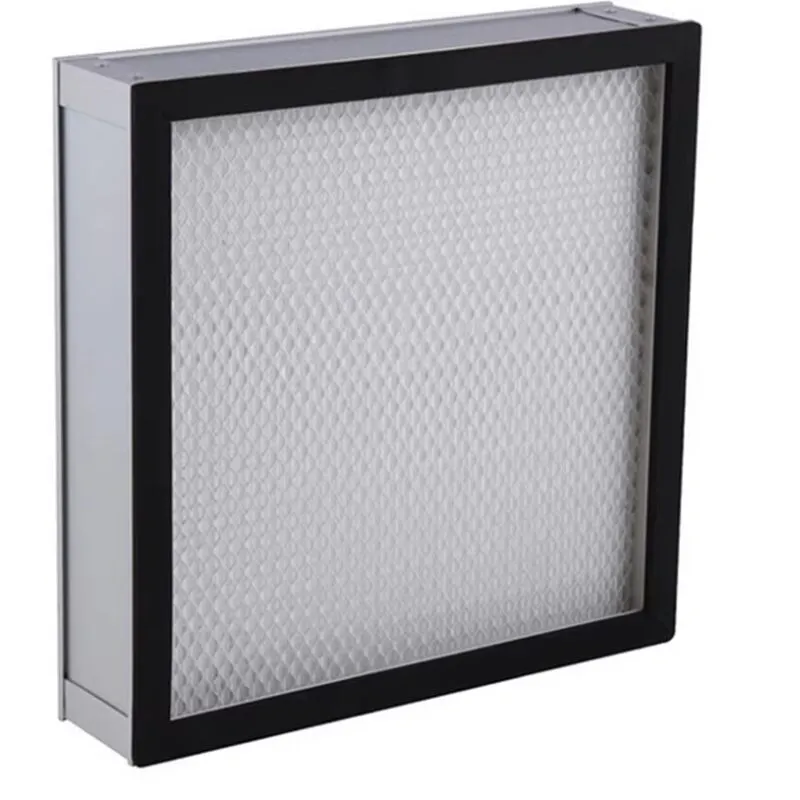
Key Considerations for High-Precision Prefiltration Filter Cartridges
High-precision prefiltration filter cartridges protect downstream filtration systems from particle contamination. This article reviews critical pre-installation checks, correct installation steps, operational monitoring, maintenance schedules, and storage conditions. Following these data-supported guidelines helps optimize filtration efficiency, reduce downtime, and extend cartridge service life across pharmaceutical, microelectronics, and industrial water treatment applications.
- 1. Pre-Installation Preparation
- 1.1 Packaging Inspection and Environmental Control
- 1.2 O-Ring Inspection and Preconditioning
- 1.3 Operational Safety Preparation
- 2. Installation Technical Requirements
- 2.1 Flow Direction Confirmation
- 2.2 Interface Installation Specifications
- 2.3 Venting Procedure
- 2.4 Initial Flush
- 3. Operating Parameters and Monitoring Standards
- 3.1 Temperature and Pressure Limits by Media Type
- 3.2 Filtration Rating Specifications
- 3.3 Differential Pressure Monitoring – The Most Critical Operating Indicator
- 3.4 Prefiltration Configuration
- 4. Cartridge Replacement Criteria
- 5. Cleaning and Maintenance Protocols
- 6. Shutdown and Long-Term Storage Requirements
- 7. Maintenance Record Keeping
- 8. Conclusion
Key Considerations for High-Precision Prefiltration Filter Cartridges
High-precision prefiltration filter cartridges are critical upstream components in filtration systems across pharmaceutical, microelectronics, chemical processing, and water treatment industries. Their primary function is to intercept large particles, colloids, suspended solids, and other contaminants from process fluids, thereby protecting downstream precision filtration assemblies and production equipment. Proper usage practices directly impact the operational efficiency and service life of the entire filtration system. This article provides a comprehensive, data-supported examination of key considerations across four dimensions: installation, operation, maintenance, and storage.
1. Pre-Installation Preparation
1.1 Packaging Inspection and Environmental Control
Prior to installation, verify that the filter cartridge packaging is intact and undamaged. Premature exposure to non-clean environments should be avoided to prevent contamination. High-precision prefiltration cartridges require a high level of cleanliness; any particulate adhesion can compromise filtration efficiency. Once opened, cartridges should be installed promptly to minimize media adsorption of airborne moisture and contaminants.
1.2 O-Ring Inspection and Preconditioning
Inspect the accompanying O-ring(s) to ensure they are free from deformation, cracks, or damage, and verify proper seating. O-ring degradation or improper seating is a common cause of bypass leakage and filtration failure. Prior to installation, wet the O-ring and cartridge socket with clean process fluid (e.g., water) to reduce insertion friction and prevent damage from dry friction. Additionally, confirm that the filter housing has been thoroughly cleaned and is free of residual debris.
1.3 Operational Safety Preparation
Before beginning installation, ensure that the inlet valve to the filter housing is closed and that downstream pressure is relieved by opening a vent or drain valve. This step is critical for safe operation.
2. Installation Technical Requirements
2.1 Flow Direction Confirmation
Verify the correct flow direction during installation, ensuring fluid enters from the outside of the cartridge and exits from the inside (outside-in flow configuration). Reverse installation will result in filtration failure. Insert the cartridge vertically to avoid misalignment that could compromise the seal.
2.2 Interface Installation Specifications
For 226-style pleated filter cartridges: Align the 226 interface threads at the cartridge base with the female threaded port in the filter housing base. Hand-tighten vertically to ensure smooth thread engagement. If a专用 wrench is required after hand-tightening, tighten only an additional 1/4 to 1/2 turn. Over-tightening may damage threads or deform the O-ring, leading to leakage.
2.3 Venting Procedure
After installation, open the vent valve at the top of the filter housing to evacuate trapped air. Residual air reduces filtration efficiency and, under high pressure, can impact the cartridge structure. Close the vent valve only after fluid begins to overflow from it. Subsequently, slowly open the inlet and outlet valves to avoid sudden high-flow surges that could damage the cartridge structure.
2.4 Initial Flush
New cartridges may contain trace impurities or protective solutions from manufacturing and transport, requiring thorough flushing prior to service. After sealing the housing, slowly open the inlet valve while keeping the downstream outlet open. Flush for a minimum of 10–15 minutes until the effluent is clear, free of visible foam, and without fine particulates. After flushing, inspect all connections for signs of leakage.
3. Operating Parameters and Monitoring Standards
3.1 Temperature and Pressure Limits by Media Type
Operation beyond specified limits will cause structural damage to the filter cartridge. The table below summarizes technical parameters for common high-precision prefiltration cartridges:
| Cartridge Type | Media | Max. Operating Temp. | Max. Operating Pressure | Max. Forward ΔP (25°C) | Max. Reverse ΔP (25°C) |
|---|---|---|---|---|---|
| APP Nanofiber Cartridge | Polypropylene (PP) | 80°C | 0.69 MPa @25°C 0.40 MPa @60°C 0.24 MPa @80°C |
0.69 MPa | 0.30 MPa |
| GGFP Gas Prefilter | Glass Fiber (GF) | 80°C | 0.69 MPa @25°C 0.40 MPa @60°C 0.24 MPa @80°C |
0.69 MPa | 0.30 MPa |
| PP Pleated Cartridge (General) | Polypropylene (PP) | Type A <60°C Type B <80°C Type C <95°C |
— | 0.42 MPa | 0.21 MPa |
| Nylon Membrane Pleated Cartridge | Nylon (N6/N66) | Standard <50°C High-temp <80°C |
0.3 MPa @<50°C 0.2 MPa @<80°C |
0.42 MPa | 0.21 MPa |
| PVDF Pleated Cartridge | PVDF | Type A <50°C High-temp <90°C |
0.3 MPa @<50°C 0.2 MPa @<90°C |
0.42 MPa | 0.21 MPa |
| F1G Glass Fiber Cartridge | Glass Fiber (GF) | B1 <60°C B2 <85°C B3 <95°C |
Forward 4 bar | 0.40 MPa | 0.20 MPa |
3.2 Filtration Rating Specifications
High-precision prefiltration cartridges are available in a wide range of filtration ratings. Common nominal ratings (μm) and their typical applications include:
| Rating (μm) | Typical Applications |
|---|---|
| 0.1 – 0.22 | Final precision filtration; pharmaceutical liquid pretreatment |
| 0.45 – 1.0 | Pharmaceutical fluid pre-filtration; beverage clarification |
| 3.0 – 5.0 | General water treatment; colloidal material pre-filtration |
| 10 – 60 | Coarse prefiltration; large-particle interception |
3.3 Differential Pressure Monitoring – The Most Critical Operating Indicator
Continuous monitoring of inlet-to-outlet differential pressure (ΔP) is the most direct indicator for determining when a cartridge requires replacement:
- For precision (security) filters, replacement is required when the ΔP exceeds 0.15 MPa or when flow rate significantly decreases.
- Maximum allowable ΔP decreases with increasing operating temperature.
- Installation of a ΔP sensor with real-time monitoring effectively prevents cartridge rupture.
3.4 Prefiltration Configuration
Implementing proper upstream coarse filtration to capture large particulate contaminants is a key measure for extending the service life of high-precision prefiltration cartridges. For feed streams with poor quality, additional upstream sedimentation or coarse filtration steps should be added to reduce contaminant loading and prevent premature fouling.
4. Cartridge Replacement Criteria
4.1 Replacement Cycle Guidelines
Filter cartridges are consumables; their effective service life is influenced by feed water quality, pressure, and throughput:
- Municipal/Residential Applications: For typical household use, prefiltration cartridges often exhibit flow attenuation within 3 to 6 months. In areas with turbid water, aging infrastructure, or high-rise secondary water supply systems, inspection and replacement may be required as early as 3 months.
- Industrial Applications: Replacement is typically scheduled at 3–6 month intervals or when ΔP exceeds 0.15 MPa.
Environmental factors affecting replacement cycles:
- Every 10% increase in ambient humidity shortens the replacement cycle by approximately 15%.
- Dust concentrations exceeding 1 mg/m³ necessitate a 40% reduction in replacement interval.
4.2 Replacement Indicators
- Flow Rate Reduction: If normal household faucet flow remains steady but the purified water outlet flow decreases from a steady stream to a trickle or drip, the cartridge is likely fouled.
- Water Quality Deterioration: If effluent becomes turbid, contains visible particulates, or shows slight discoloration, the cartridge has reached saturation and requires immediate replacement.
5. Cleaning and Maintenance Protocols
5.1 Cleaning Procedure Guidelines
When cartridge fouling occurs, prompt cleaning or replacement is required. Adhere to the following principles:
- Avoid Physical Impact: Protect the filter media from contact with hard objects to prevent deformation or damage, which would compromise filtration accuracy.
- Compatible Cleaning Media: Avoid aggressive solvents that may react chemically with the filter media, as this can damage internal pore structure.
- Post-Cleaning Inspection: If visible deformation or damage is found, the cartridge must be replaced and not returned to service.
5.2 In-Line Steam Sterilization
Certain cartridge types support in-line steam sterilization:
- GGFP Series Gas Prefilters: Capable of 121°C in-line steam sterilization for 30 minutes, with cumulative cycles up to 20 (at ΔP <30 kPa).
- Nylon and PVDF Pleated Cartridges: Support 125°C steam sterilization for 30 minutes per cycle, with ≥7 cycles achievable.
6. Shutdown and Long-Term Storage Requirements
For short-term shutdowns, drain residual fluid from the housing to prevent stagnation and microbial growth. Prior to long-term storage, thoroughly clean the cartridge and immerse it in a compatible sterilant solution (e.g., sodium hypochlorite) to prevent media drying and aging. Before re-commissioning after storage, thoroughly flush the cartridge and housing to ensure no residual contaminants are reintroduced into the process stream.
7. Maintenance Record Keeping
Establish a maintenance log to track installation dates, differential pressure readings, and environmental parameters. Utilize OEM technical specifications to optimize replacement scheduling. For critical pharmaceutical and electronics applications, biosafety parameters should be verified: endotoxin levels should be <0.25 EU/ml, and extractables should be ≤50 mg per 10-inch cartridge.
8. Conclusion
Proper use of high-precision prefiltration cartridges is a systematic undertaking encompassing installation protocols, operational monitoring, cleaning/maintenance practices, and storage management. Adherence to the technical requirements and parameter limits outlined above—combined with robust ΔP monitoring and record-keeping practices—is essential for extending cartridge service life and ensuring stable filtration system performance. During the selection phase, the cartridge media and rating should be matched to specific process conditions (fluid properties, temperature, pressure, contaminant loading, etc.) to achieve the optimal balance between filtration efficiency and economic cost.
Please login to write a comment after