 English
 Español
 Français
 Italiano
 Deutsch
 日本語
 Русский
 العربية
 Português
 Svenska

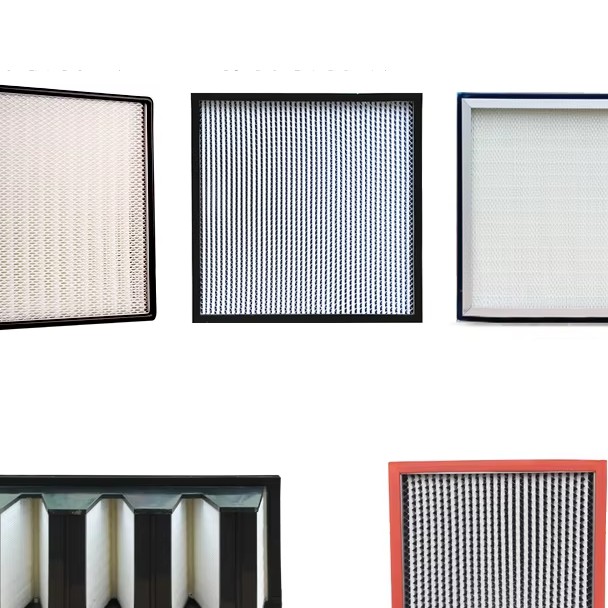
HEPA Filter Life: Key Factors Explained
Explore the key factors that determine HEPA filter service life, including pressure drop, pre-filter protection, and environmental exposure, in this data-supported analysis.
- 1. Pre-Filtration: The Dominant External Factor
- 2. Pressure Drop: The Core Quantitative Criterion
- 3. Environmental Factors: Humidity, Temperature, and Chemical Attack
- 4. Media Aging and Physical Service Life
- 5. Maintenance Strategy and Monitoring
- 6. Conclusion: Weighted Ranking of Life-Determining Factors
Factors Determining HEPA Filter Service Life: A Data-Supported Analysis
High-efficiency particulate air (HEPA) filters serve as the terminal barrier in cleanrooms, pharmaceutical manufacturing, nuclear facilities, and other critical environments, achieving filtration efficiencies of 99.97% or greater for particles of 0.3 µm. Their service life is not a fixed term but a dynamic variable shaped by pressure drop growth rate, pre-filter protection level, environmental and chemical exposure, media aging, and maintenance monitoring strategy. This article analyzes each factor using quantitative data and presents the key parameters in tabular form.
1. Pre-Filtration: The Dominant External Factor
Among all external factors, the efficiency and maintenance of upstream pre-filters has the largest measurable impact on HEPA filter life. HEPA filters are designed to intercept rather than to store large quantities of particulate matter; their dust-holding capacity is finite. The degree to which upstream particles are removed directly determines the rate at which the HEPA filter’s resistance rises.
The U.S. Department of Energy’s Nuclear Air Cleaning Handbook states that HEPA filter service life can often be extended by using less efficient filters to selectively remove the largest particles and fibers from the incoming airstream. In some cases, HEPA filter lifetimes can be increased by as much as four times with multiple pre-filter changes during the interval between HEPA filter replacements. The handbook also estimates that, with frequent pre-filter replacements, savings in filter system operation could be as much as one-third the cost of operating without pre-filters.
A 2025 experimental study on two-stage ultra-high-efficiency filtration systems provides precise quantification. Testing five pre-filter grades (F7–F9, H10, H11) against two main-filter media types (fiberglass and composite), researchers found that F8 pre-filter media had the best effect on extending service lifetime. For the fiberglass (BX) main filter, service life was extended from 44 minutes to 231 minutes—a factor of 5.25. For the composite (BX PTFE) main filter, life was extended from 70 minutes to 326 minutes—a factor of 4.65.
| Pre-Filter Configuration | Main Filter Type | Baseline Service Life | Extended Service Life | Extension Factor | Source |
|---|---|---|---|---|---|
| No pre-filter | BX (fiberglass) | 44 min | — | 1.0× | Xie et al., 2025 |
| F8 pre-filter | BX (fiberglass) | 44 min | 231 min | 5.25× | Xie et al., 2025 |
| No pre-filter | BX PTFE (composite) | 70 min | — | 1.0× | Xie et al., 2025 |
| F8 pre-filter | BX PTFE (composite) | 70 min | 326 min | 4.65× | Xie et al., 2025 |
| Multiple pre-filter changes | Generic HEPA | Baseline | Up to 4× baseline | 4.0× | DOE Nuclear Air Cleaning Handbook |
The Oak Ridge National Laboratory’s comparative study further illustrates this effect. A pre-filter consisting of graded polyester fibers (40 denier upstream, 4 denier downstream) was operated at 1,800 CFM. Its resistance increased monotonically for 116 days, reaching 1.34 inches water gauge before replacement. The downstream HEPA filter’s resistance rise was markedly slowed during this period, confirming that the pre-filter bore the brunt of the particulate loading.
Beyond pre-filter efficiency, the filter media area itself directly affects service life. Theoretically, a filter with twice the filter paper area operating at half the filtration velocity should achieve four times the service life. However, Oak Ridge’s research found that the actual service life increase achieved by downrating European-design filters was only half the theoretical prediction, because air passages between closely spaced pleats became bridged by coarse fibrous material, causing an enormous increase in the rate of pressure rise. This finding underscores that pleat geometry and media spacing interact with media area to determine actual life.
2. Pressure Drop: The Core Quantitative Criterion
The terminal point of a HEPA filter’s service life is fundamentally determined by whether its resistance has risen to an unacceptable level. As particles accumulate in the filter media, pressure drop increases, system energy consumption rises, and air delivery capacity declines.
The most widely adopted criterion is the “double initial pressure drop” rule. Camfil’s technical bulletin states that, at minimum, the filter should be replaced when the pressure drop reaches two times the initial pressure drop, assuming normal design airflows. For a Camfil Megalam panel with a clean pressure drop of approximately 100 Pa, doubling to 200 Pa is described as “reasonable and prudent for filter performance and energy use considerations”. For AHU-mounted, exhaust, or bag-in/bag-out HEPA filters, the clean pressure drop is normally targeted at around 250 Pa, making the change-out point 500 Pa. A patent specification similarly recommends that the initial pressure loss be set at approximately 250 Pa or less, with replacement triggered when pressure loss exceeds twice the initial value.
| Criterion Type | Threshold Value | Application Context | Source |
|---|---|---|---|
| Initial pressure drop | ≤250 Pa (recommended) | General HEPA units | Patent specification |
| Replacement trigger | 2× initial pressure drop | General recommendation | Camfil Technical Bulletin |
| Example (terminal panel) | 100 Pa → 200 Pa | Camfil Megalam panel at 0.45 m/s | Camfil Technical Bulletin |
| Example (AHU/BIBO) | 250 Pa → 500 Pa | AHU, exhaust, BIBO HEPA | Camfil Technical Bulletin |
| Fixed terminal value | 160 Pa | Hospital clean operating departments | Industry standard |
| Fixed terminal value | 294 Pa | Specific HEPA filter unit (initial 127 Pa) | Manufacturer FAQ |
| Fixed terminal value | 400–450 Pa | Industrial cleanroom applications | Industry practice |
The rate of pressure drop increase depends heavily on inlet particulate concentration. In nuclear facility applications, HEPA filter backpressure has been observed to increase by approximately 9% per month under moderate particulate loading. Under higher loading conditions, the pressure drop change can reach 32–36% within two months. This rate directly determines the time required for a filter to rise from initial resistance to terminal resistance, explaining why identical filter models can exhibit service lives differing by a factor of several across different environments.
3. Environmental Factors: Humidity, Temperature, and Chemical Attack
3.1 Humidity and Temperature
Moisture and temperature jointly accelerate HEPA filter degradation. Research by the Institute for Clean Energy Technology at Mississippi State University defined the combined elevated temperature and relative humidity resistance thresholds for ASME AG-1 Section FC HEPA filters used in DOE complexes. Test variables included air temperatures of 48.88°C, 54.44°C, or 60°C (120, 130, or 140°F) and relative humidity ranges of 60–70%, 80%, or 90+%, with initial filter pressure drops of 497.68 Pa, 746.52 Pa, or 995.36 Pa (2, 3, or 4 inches water column) for full bracketing of conditions. Under these elevated conditions, dimple pleat radial flow HEPA filters exhibited structural strength issues, with the dimple pleats losing integrity.
Camfil’s technical bulletin provides practical guidance: wet filters should be replaced as soon as possible, and conditions causing wetting should be corrected. Filters allowed to remain wet for 48 hours or more could be subject to mold growth within the media, and filters that are allowed to dry after being wet may have a higher pressure drop compared to their pressure drop before wetting.
| Factor | Test/Threshold Conditions | Observed Effect | Source |
|---|---|---|---|
| Elevated temperature | 48.88°C / 54.44°C / 60°C | Dimple pleat strength degradation | ICET / DOE study |
| Elevated RH | 60–70% / 80% / 90+% | Combined with temperature, structural failure risk | ICET / DOE study |
| Wetting duration | ≥48 hours | Mold growth within media; increased pressure drop | Camfil Technical Bulletin |
| Ideal operating RH | 40–60% | Minimizes moisture-related degradation | Industry practice |
| Ideal operating temperature | 15.6–26.7°C | Standard cleanroom conditions | Industry practice |
3.2 Chemical Corrosion: The Case of Hydrofluoric Acid
In specific industrial settings, chemical attack can completely bypass the pressure drop criterion and become the decisive factor terminating filter life. Glass fiber filter media—the core filtration medium of most HEPA filters—are highly susceptible to hydrofluoric acid (HF). Laboratory and in-service tests conducted at Rocky Flats established that the two most corrosive chemicals entering filter plenums were HNO₃ and HF, used in plutonium dissolution processes. The research confirmed that HF attacks all glass fibers, with the smallest-diameter fibers being most susceptible because of their greatest surface area-to-mass ratio.
In pharmaceutical and chemical workshops where airborne HF is present and the HVAC system is not designed for 100% outside air, return-air HF will continuously corrode the glass fiber media of HEPA filters. Under such conditions, filter replacement is not determined by resistance but is mandated by safety regulations at predetermined intervals. This means that even if pressure drop is far below the terminal resistance threshold, the filter must be scrapped on schedule, and its actual service life may be far shorter than that of an identical filter in a non-corrosive environment.
Mitigation strategies include using filter media of glass fiber with Nomex additive and aluminum separators with an epoxy-vinyl coating, which have performed well in acid environments in both laboratory and prototype in-service filters at Rocky Flats. Alternatively, non-glass filter media can be specified for HF-containing environments.
4. Media Aging and Physical Service Life
Even in the absence of particulate clogging, HEPA filter media undergo physical aging over time. For nuclear-grade HEPA filters, the U.S. Department of Energy long imposed a conservative 10-year shelf and service life from the date of manufacture. Early research (Bergman, 1994) tested filter media extracted from standard HEPA filters stored for up to 18 years and showed that tensile strength decreased with age. DOE-HDBK-1169-2003 concluded that, under dry conditions, filter media fail the required tensile strength or have very low burst strengths after 7 to 13 years, or an average of 10 years.
However, more recent systematic research has challenged this conservative assumption. A 2025 study published in Progress in Nuclear Energy compared tensile strength results between unused new filters and unused aged filters (7, 10, and 13 years old). Statistical analysis indicated that differences in tensile strength between new and aged HEPA filters are not significant. A Pacific Northwest National Laboratory study assessed 1,600 aged filters and compared tensile strength between new and 10-year aged filters. The results collectively suggest that HEPA filters can reasonably operate safely and efficiently under proper maintenance for 20 years when managed with well-defined performance and operational requirements. This 20-year lifetime extension is described as “low risk, reduces program costs, and provides operational continuity.”
| Study / Source | Sample Size | Age Range Tested | Key Finding | Implied Service Life |
|---|---|---|---|---|
| DOE-HDBK-1169-2003 | — | 7–13 years | Tensile strength failure after 7–13 years (dry) | 10 years (average) |
| Bergman, 1994 | — | Up to 18 years storage | Tensile strength decreased with age | — |
| Barnett et al., 2025 | — | 7, 10, 13 years | New vs. aged difference not significant | Supports >13 years |
| PNNL / WM2022 | 1,600 filters | Up to 20+ years | Reasonable safe operation for 20 years | 20 years |
| Camfil experience | — | 15+ years in operation | No problems reported | 15+ years |
5. Maintenance Strategy and Monitoring
5.1 Periodic Testing as a Life-Management Calibrator
HEPA filter service life cannot be reliably estimated by experience-based service life alone; it must be dynamically calibrated through periodic testing. ISO 14644-3 and IEST-RP-CC034.5 provide additional guidance: unless approved otherwise, HEPA filters are tested at minimum once every 12 months, except those installed in ISO Class 5 facilities, which are tested every 6 months. Leak-test acceptance thresholds themselves constitute a life criterion: the widely adopted allowable leakage rate in clean zones is ≤0.01%, with local leak point concentration not exceeding 3 times the surrounding average. Once a leak test fails, the filter must be replaced or repaired and retested, regardless of pressure drop level.
5.2 Standardization of Life Monitoring Systems
The 2025 publication of the group standard T/SA 8-2025, Technical Specification for High Efficiency Filter Life Monitoring System, marks a paradigm shift from periodic offline testing to real-time online monitoring. The standard requires systems to achieve real-time monitoring and life prediction of pressure drop, particulate concentration, and airflow, with audible-visual alarms, multi-mode data transmission, and encrypted storage. It specifies monitoring accuracy, stability, electromagnetic compatibility performance indicators, calibration cycles, maintenance requirements, and filter replacement judgment conditions. This standardization trend means that future HEPA filter service life will transition from an “empirical value” to a “data-driven variable,” substantially improving the precision of maintenance decisions.
6. Conclusion: Weighted Ranking of Life-Determining Factors
Based on the data presented, the factors determining HEPA filter service life can be ranked by their measured impact:
- First, pre-filter protection level (dominant factor). Different pre-filter configurations can extend HEPA filter life by factors ranging from 4× to 5.25×. F8 pre-filter media has demonstrated the best performance in controlled experiments. Pre-filter replacement frequency directly correlates with HEPA life extension, and operational cost savings can reach one-third.
- Second, pressure drop growth rate (core criterion). Terminal resistance is commonly set at 2× initial pressure drop or fixed values of 160–500 Pa depending on application. Filter media area and pleat geometry significantly influence the actual rate of resistance rise.
- Third, environmental humidity and chemical exposure (application-specific determinants). Relative humidity above 80% combined with elevated temperature causes structural degradation. In HF-containing environments, filter life is governed by safety-mandated replacement schedules rather than pressure drop, and may be far shorter than in conventional applications.
- Fourth, media physical aging (secondary but defining upper bound). Under dry, low-load conditions, HEPA media tensile strength shows no statistically significant degradation over 13 years. Average operating life of 12 years has been documented, and 20 years is considered reasonable under proper maintenance.
- Fifth, maintenance monitoring strategy (execution assurance). Periodic leak testing and pressure drop monitoring are essential to avoid both premature replacement and overdue service. Real-time life monitoring systems are becoming standardized.
In practice, HEPA filter life judgment should follow the principle of “pressure drop as primary, leak testing as auxiliary, environmental correction as modifier, and data calibration as verification.” A cleanroom system configured with F8 pre-filtration, operating in a temperature- and humidity-controlled environment, and subject to periodic leak testing will typically yield a terminal HEPA filter economic life of 3 to 8 years, with physical life exceeding 10 years under favorable conditions. In systems with weak pre-filtration, elevated humidity, or chemical corrosion, service life may be reduced to less than 1 year.
Please login to write a comment after