 English
 Español
 Français
 Italiano
 Deutsch
 日本語
 Русский
 العربية
 Português
 Svenska

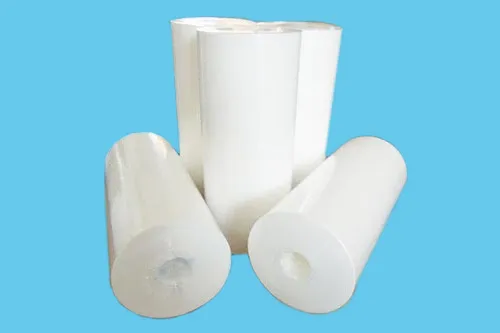
The Role of Synthetic Fiber Filter Cotton: A Data-Supported Analysis from Air Purification to Industrial Dust Removal
Synthetic fiber filter cotton, made from PET, PP, and nylon via nonwoven processes, captures particulates in air and liquids across HVAC, spray booths, and purifiers.
- Abstract
- 1. Global Market Position: Synthetic Fiber Filter Cotton Is Now a Mainstream Filtration Material
- 2. Core Functions: Graded Filtration, Particle Capture, and Dust Holding
- 3. Application Scenario 1: Air Purification and HVAC
- 4. Application Scenario 2: Industrial Spray Painting and Surface Treatment
- 5. Application Scenario 3: Water Treatment and Liquid Filtration
- 6. Performance Advantages: Why Choose Synthetic Fiber Filter Cotton
- 7. Technology Trends: Nanofibers, Electrospinning, and Sustainable Materials
- 8. Conclusion
The Role of Synthetic Fiber Filter Cotton: A Data-Supported Analysis from Air Purification to Industrial Dust Removal
Abstract
Synthetic fiber filter cotton is an engineered filtration material made from synthetic polymers such as polyester (PET), polypropylene (PP), and nylon (PA). It is produced through nonwoven processes including melt-blowing, spun-bonding, needle-punching, hot-melt bonding, and electrospinning. Its core function is to capture and remove particulate matter from air or liquids, while also serving as a pre-filter, medium-efficiency filter, paint-protection layer, and precision filter in HVAC systems, industrial spray booths, water treatment, automotive air intake, and air purifiers.
This article uses data tables to explain the role of synthetic fiber filter cotton from the perspectives of market scale, filtration grades, dust-holding capacity, application parameters, performance comparisons, and technology trends. The data below are representative values drawn from public industry reports, product literature, and experimental studies. They are intended for comparison and trend analysis; actual values vary by manufacturer, test standard, and operating condition.
1. Global Market Position: Synthetic Fiber Filter Cotton Is Now a Mainstream Filtration Material
In terms of industrial scale, synthetic fiber filter media occupy a dominant position in the global filtration market. In 2025, global sales of synthetic fiber filter media reached USD 5.693 billion and are projected to reach USD 8.401 billion by 2032, with a compound annual growth rate of 5.8% from 2026 to 2032. In 2024, global production was about 1.15 million tons, capacity was about 1.35 million tons, prices ranged from USD 3,200 to USD 8,600 per ton, and the gross margin was about 31%.
| Indicator | Value | Time/Condition |
|---|---|---|
| Global market sales | USD 5.693 billion | 2025 |
| Forecast sales | USD 8.401 billion | 2032 |
| CAGR | 5.8% | 2026–2032 |
| Global production | About 1.15 million tons | 2024 |
| Global capacity | About 1.35 million tons | 2024 |
| Price range | USD 3,200–8,600/ton | 2024 |
| Gross margin | About 31% | 2024 |
Among product categories, synthetic fiber filter cotton accounts for 54.8% of global shipments, while glass fiber filter cotton accounts for 29.3%; the remaining categories together account for about 15.9%. This shows that synthetic fiber filter cotton is not only an important branch of filtration materials but also the single largest category by shipment volume.
| Category | Share of Global Shipments |
|---|---|
| Synthetic fiber filter cotton | 54.8% |
| Glass fiber filter cotton | 29.3% |
| Other categories combined | About 15.9% |
The dominant position of synthetic fiber filter cotton comes from its adjustable pore size, high dust-holding capacity, chemical resistance, moisture resistance, and scalability through hot-melt, needle-punching, and melt-blowing processes. Compared with glass fiber, it does not easily shed fibers. Compared with wood-pulp fiber, it offers better structural stability and service life in humid environments.
2. Core Functions: Graded Filtration, Particle Capture, and Dust Holding
The core function of synthetic fiber filter cotton is to intercept and remove particulate matter from fluids. It is an internal filtration material: when dust-laden gas or liquid passes through the filter cotton, particles are captured by fiber surfaces through interception, inertial impaction, diffusion deposition, and electrostatic adsorption, and are retained inside the filter layer.
Synthetic fiber filter cotton usually adopts a graduated density structure, in which multiple layers become progressively denser toward the clean-air side. Large particles are intercepted by the outer layer, while smaller particles are captured by the inner layer. This design improves filtration efficiency while extending service life.
| Filtration Grade | Particle Size Captured | Removal Rate/Efficiency | Typical Application |
|---|---|---|---|
| G1 | Larger than 5 μm | — | Coarse dust pre-filtration |
| G2 | — | — | General pre-filtration |
| G3 | — | About 70% | HVAC pre-filtration |
| G4 | Larger than 0.3 μm | About 85% | Spray painting, purification pre-filtration |
| F5 | Finer particles | About 95% | Medium-efficiency filtration |
Table 3 shows that as the filtration grade increases, the ability to remove fine particles improves significantly. G3 grade has a removal rate of about 70%, G4 about 85%, and F5 about 95%. This means synthetic fiber filter cotton can cover a wide range of filtration needs from coarse to medium efficiency through different density and thickness designs.
Dust-holding capacity is a key indicator of the practical service life and economic performance of filter cotton. The higher the dust-holding capacity, the longer the replacement cycle and the lower the maintenance cost.
| Product/Model | Thickness | Grade | Dust-Holding Capacity | Initial Resistance | Efficiency | Temperature Resistance | Remarks |
|---|---|---|---|---|---|---|---|
| Gu Mei SM series | 5 mm | G2 | 350 g/m² | — | — | — | Capacity increases with thickness |
| Gu Mei SM series | 20 mm | G4 | 600 g/m² | — | — | — | High dust-holding design |
| Dry filter cotton | — | — | 300–800 g/m² | — | 75%–80% | — | Industrial spray painting |
| Gu Mei SM-C250 | 15 mm | G3 | — | 35 Pa | Gravimetric efficiency 80%–90% | 80°C | Rated airflow 5,400 m³/h |
| Air purifier filter cotton | 38 mm | G3 | — | 25 Pa | Gravimetric efficiency 80%–90% | Above 100°C | 450 mm × 470 mm × 38 mm |
Table 4 shows that synthetic fiber filter cotton can achieve a good balance between dust-holding capacity and resistance. For example, Gu Mei SM-C250 at G3 grade has an initial resistance of only 35 Pa, a gravimetric efficiency of 80%–90%, and a rated airflow of 5,400 m³/h. Air-purifier filter cotton with a thickness of 38 mm has an initial resistance of only 25 Pa and a temperature resistance above 100°C, making it suitable for long-term operation.
3. Application Scenario 1: Air Purification and HVAC
In HVAC systems of commercial buildings and industrial facilities, synthetic fiber filter cotton is usually used as a pre-filter to capture large particles such as dust, pollen, and pet dander. Its role is to extend the service life of downstream high-efficiency filters and reduce replacement frequency and maintenance costs.
| Application Scenario | Product/Parameter | Value | Function |
|---|---|---|---|
| HVAC pre-filtration | Initial pressure drop | About 20 Pa | Low air resistance, stable airflow |
| Air-conditioning pre-filtration | Gu Mei SM-C250 | G3, 80%–90%, 35 Pa | Industrial exhaust, oil mist treatment |
| Air purifier pre-filter layer | Size 450 × 470 × 38 mm | PET organic synthetic fiber | Intercepts large particles |
| Air purifier pre-filter layer | Test velocity 1.5 m/s | G3, 80%–90%, 25 Pa | Low-resistance operation |
| Air purifier pre-filter layer | Temperature resistance | Above 100°C | Good stability |
In humid environments, the advantages of synthetic fiber filter cotton become more obvious. Research by the Dongfeng Commercial Vehicle Technical Center shows that synthetic fiber filter media are significantly superior to traditional wood-pulp fiber media in dust-holding capacity, initial filtration accuracy, and full-life filtration performance, while also offering lower intake resistance and more stable structural characteristics.
| Comparison Item | Synthetic Fiber Filter Media | Traditional Wood-Pulp Fiber Media | Improvement |
|---|---|---|---|
| Dust-holding capacity | Better | Baseline | Improved |
| Initial filtration accuracy | Better | Baseline | Improved |
| Full-life filtration performance | More stable | Baseline | Improved |
| Intake resistance | Reduced by about 20% | Baseline | −20% |
| Fuel economy | Improved by about 1% | Baseline | +1% |
| Vehicle test | 60,000 km | — | Fuel-saving validation |
Table 6 shows that in vehicle intake or humid-environment filtration, synthetic fiber filter elements can reduce intake resistance by about 20% and improve fuel economy by about 1%. After a 60,000 km vehicle test, synthetic fiber filter elements achieved actual fuel savings. This indicates that synthetic fiber filter cotton not only performs a filtration function but can also indirectly improve system energy efficiency by reducing resistance.
4. Application Scenario 2: Industrial Spray Painting and Surface Treatment
In industrial spray painting, the typical product of synthetic fiber filter cotton is ceiling filter cotton. It is used in the top air-supply system of coating factories, spray booths, and baking booths to collect fine dust particles, prevent paint contamination, ensure highly clean air inside the booth, and create uniform airflow distribution.
| Model | Weight | Dust-Holding Capacity | Capture Efficiency | Initial Pressure Loss | Temperature Resistance | Fire Standard |
|---|---|---|---|---|---|---|
| HCF-600G | 600 g/m² | 400 g/m² | 97%–99% | 26 Pa | 120°C | DIN53438-F1, UL900-Class2 |
Table 7 shows that HCF-600G ceiling filter cotton has a capture efficiency of 97%–99%, an initial pressure loss of only 26 Pa, a temperature resistance of 120°C, and compliance with European DIN53438-F1 and U.S. UL900-Class2 fire classifications. This means it can provide both high-efficiency filtration and meet the fire-safety and airflow-organization requirements of spray-painting workshops.
| Product | Grade | Filtration Accuracy | Efficiency | Function |
|---|---|---|---|---|
| PA-5 micron | M6 | Larger than 5 μm | 100% capture | Spray booth ceiling filter |
| PA/560 G-10 | — | Larger than 10 μm | Almost complete filtration | Prevents paint defects |
Table 8 shows that high-end synthetic fiber filter cotton can achieve 100% capture of particles larger than 5 μm and almost complete filtration of particles larger than 10 μm. This is critical for preventing paint surface defects and ensuring spray uniformity. Some filter cotton is also treated with an adhesive, which fully penetrates the medium so that dust particles cannot pass through, while the filtered air diffuses evenly to form a laminar flow state.
5. Application Scenario 3: Water Treatment and Liquid Filtration
Synthetic fiber filter cotton also plays a significant role in water treatment. Folded synthetic fiber filter cartridges used in water treatment tanks have strong contaminant-holding capacity, filtration accuracy down to 1 μm, and a service life of 3–5 years. Multi-fold polyester fiber cartridges and polypropylene melt-blown cartridges cover multiple accuracy grades from 1 μm to 150 μm.
| Type | Filtration Accuracy | Operating Temperature | Operating Pressure | Service Life | Flow Rate |
|---|---|---|---|---|---|
| Folded synthetic fiber cartridge | 1 μm | — | — | 3–5 years | — |
| Multi-fold polyester fiber cartridge | 1, 5, 10, 20, 50 μm | 37.8°C | 4.0 Bar | — | 3–10 GPM per 10 in. |
| Polypropylene melt-blown cartridge | 1.0, 3.0, 5.0, 10, 25, 50, 75, 100, 150 μm | — | — | — | — |
Table 9 shows that synthetic fiber filter cotton can achieve 1 μm precision filtration in water treatment while also offering a variety of coarse filtration options. In aquarium and aquatic purification applications, synthetic fiber filter cotton is highly effective at decomposing waste and feed residues and improving water clarity. It does not clog easily, does not deform, and can be reused after cleaning.
6. Performance Advantages: Why Choose Synthetic Fiber Filter Cotton
Synthetic fiber filter cotton stands out among filtration materials because of its multiple performance advantages. Table 10 compares synthetic fiber, glass fiber, and wood-pulp fiber in terms of shipment share, fiber-shedding risk, moisture resistance, chemical resistance, structural stability, and economic performance.
| Comparison Dimension | Synthetic Fiber Filter Cotton | Glass Fiber Filter Cotton | Wood-Pulp Fiber |
|---|---|---|---|
| Shipment share | 54.8% | 29.3% | — |
| Fiber-shedding risk | Low | Present | Low |
| Moisture resistance | Up to 100% RH | Moderate | Poor |
| Chemical resistance | Excellent | Moderate | Poor |
| Structural stability | High | Medium | Low |
| PFAS risk | New generation can be PFAS-free | May contain | — |
| Economic performance | Gross margin about 31% | — | — |
Table 10 shows that synthetic fiber filter cotton has comprehensive advantages in shipment share, moisture resistance, chemical resistance, and structural stability. In particular, the new generation of fully synthetic nanofiber filtration media is PFAS-free and fiber-shedding-free, offering clear environmental and health advantages over traditional glass fiber media.
Different synthetic fiber materials also have their own characteristics. Polyester fiber has good heat and acid resistance, and its wear resistance is second only to polyamide fiber. Polypropylene fiber offers excellent toughness, flexibility, and chemical resistance. Nylon fiber has the best wear resistance.
| Material | Heat Resistance | Acid Resistance | Wear Resistance | Chemical Resistance | Typical Use |
|---|---|---|---|---|---|
| Polyester PET | Long-term use below 400 K | Good | Second only to PA | Good | Air/liquid filtration |
| Polypropylene PP | Moderate | Excellent | Good | Excellent | Liquid/gas filtration |
| Nylon PA | Relatively good | Medium | Excellent | Medium | Wear-resistant applications |
Table 11 shows that synthetic fiber filter cotton can be adapted to different operating conditions through material selection. For example, polyester can be preferred for high-temperature air filtration, polypropylene for liquid filtration and chemical-corrosion resistance, and nylon for high-wear applications.
7. Technology Trends: Nanofibers, Electrospinning, and Sustainable Materials
The technology of synthetic fiber filter cotton is evolving toward higher efficiency, lower resistance, and greater environmental friendliness. Nanofiber technology is one important direction.
| Material/Technology | Target Pollutant | Efficiency | Resistance | Standard/Condition |
|---|---|---|---|---|
| PLA nanofiber | PM0.3 | 99.97% | — | — |
| PLA nanofiber | PM1.0 | 99.99% | — | — |
| Nylon-6/SiO₂ | PM | 99.99% | 101 Pa | 32 L/min |
| Nylon-6/SiO₂ | PM | 99.9% | 254 Pa | 85 L/min, GB 19083-2011 |
Table 12 shows that PLA nanofiber can achieve a filtration efficiency of 99.97% for PM0.3 and 99.99% for PM1.0. Nylon-6/SiO₂ composite fiber membrane achieves a PM removal rate of 99.99% at a flow rate of 32 L/min with an air resistance of only 101 Pa. At 85 L/min, the filtration efficiency remains 99.9% with a resistance of 254 Pa, meeting the GB 19083-2011 standard.
Electrospinning technology is also driving improvements in filtration material performance. A research team at Fuzhou University proposed a multi-level jet-splitting electrospinning strategy and successfully prepared a biodegradable cross-scale fiber membrane whose polymer consumption is 99% lower than that of commercial N95 masks. A micro-wrinkled nanofiber filter achieved a quality factor exceeding 0.26 Pa⁻¹, more than twice that of military gas-mask filters and more than three times that of glass fiber filters.
| Technology/Material | Indicator | Value | Comparison |
|---|---|---|---|
| Multi-level jet-splitting electrospinning | Polymer consumption | Reduced by 99% | Compared with commercial N95 masks |
| Micro-wrinkled nanofiber filter | Quality factor | Above 0.26 Pa⁻¹ | Over 2× military gas-mask filters, over 3× glass fiber |
| Recycled PET filter media | Filtration grade | MERV 8+ | Pressure drop below 2.9 PSI |
Table 13 shows that synthetic fiber filter cotton is moving toward biodegradable, recyclable, and low-energy-consumption directions. Polyester fiber made from recycled PET beverage bottles can achieve a MERV 8+ filtration grade and a pressure drop below 2.9 PSI, providing a new path for the circular economy.
8. Conclusion
The data tables above show that the role of synthetic fiber filter cotton is not a single function of “filtration.” Instead, it covers multiple functions including particle interception, graded filtration, dust holding, low-resistance operation, paint-surface protection, liquid purification, and system energy savings.
From a market perspective, synthetic fiber filter cotton accounts for 54.8% of global shipments and is the leading category in filtration materials. In terms of filtration efficiency, G3 grade has a removal rate of about 70%, G4 about 85%, and F5 about 95%. In terms of dust-holding capacity, typical products can reach 350–600 g/m², while dry filter cotton can reach 300–800 g/m². In application, it has mature parameter support in HVAC, air purifiers, industrial spray painting, water treatment, and automotive air intake. In terms of technology trends, nanofibers, electrospinning, and recycled PET materials are driving it toward higher efficiency, lower resistance, and greater environmental friendliness.
Therefore, synthetic fiber filter cotton is an irreplaceable foundational material in modern filtration systems. Through controllable fiber structures, graduated density designs, and diverse material options, it continues to play a key role in air purification, industrial dust removal, liquid filtration, and surface treatment, while contributing stable growth value to the global filtration materials market.
Please login to write a comment after