 English
 Español
 Français
 Italiano
 Deutsch
 日本語
 Русский
 العربية
 Português
 Svenska

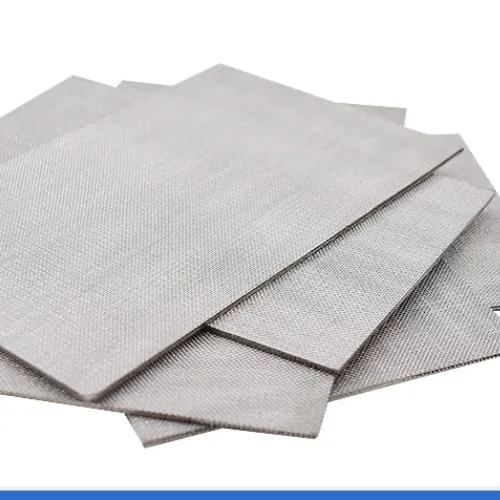
The Difference Between 100-Mesh and 400-Mesh Filter Screens
Choosing between 100-mesh and 400-mesh filter screens requires understanding trade-offs beyond particle size. While 400-mesh offers finer filtration with 37μm apertures, it delivers lower flow and higher pressure drop. This guide compares aperture, flow rate, pressure loss, applications, and total cost to help engineers select the optimal mesh for their filtration system.
- 1. The Essence of Mesh Count: The Inverse Relationship Between Density and Aperture
- 2. Core Performance Differences: Flow Rate, Pressure Drop, and Resistance
- 3. Application Scenarios: Coarse vs. Fine Filtration
- 🔹 100-Mesh: Primary Filtration and Coarse Particle Interception
- 🔸 400-Mesh: Fine Filtration and High-Purity Requirements
- 4. Comprehensive Cost Analysis: Beyond the Purchase Price
The Difference Between 100-Mesh and 400-Mesh Filter Screens
The “mesh count” of a filter screen is a core metric for measuring its filtration precision. A common misconception is that “higher mesh means better filtration,” but the reality is far more nuanced. This article provides a systematic, data-backed comparison of 100-mesh and 400-mesh filter screens across five key dimensions: aperture size, flow rate, pressure drop, application scenarios, and total cost of ownership.
1. The Essence of Mesh Count: The Inverse Relationship Between Density and Aperture
Mesh count refers to the number of openings per square inch (approximately 25.4mm × 25.4mm). Therefore, a higher mesh count means more openings per unit area, and each individual opening—the aperture (i.e., filtration precision)—is smaller. The two are strictly inversely proportional.
Here is a precise parameter comparison based on data compiled from multiple industry sources:
| Parameter | 100-Mesh | 400-Mesh | Data Support & Notes |
|---|---|---|---|
| Aperture (Theoretical) | 0.15mm (150μm) | 0.037mm (37μm) | 100-mesh aperture is roughly 1.5× the diameter of a human hair; 400-mesh aperture is about 15× the diameter of a PM2.5 particle. |
| Wire Diameter Range | Approx. 0.08 – 0.10mm | Approx. 0.03mm | Finer wires enable denser weaving but increase manufacturing costs. |
| Open Area Percentage | Approx. 54% | Approx. 33% – 39% (estimated) | Smaller apertures and finer wires significantly reduce the effective open area for fluid passage. |
2. Core Performance Differences: Flow Rate, Pressure Drop, and Resistance
The disparity in aperture size directly determines the hydraulic performance of the two filter types.
2.1 Flow Rate and Flux
- 100-Mesh: High permeate flux, typically ≥ 50 L/m²·h.
- 400-Mesh: Significantly lower permeate flux, typically ≤ 10 L/m²·h.
2.2 Pressure Drop and Resistance
While a higher mesh count improves precision, it introduces substantial flow resistance. Pressure drop—the loss of pressure as fluid passes through the screen—is a critical factor.
- Engineering Data: Engineering documentation for filter selection shows that, under identical conditions, the pressure drop correction factor for a 100-mesh screen is 1.7. For higher mesh counts, this factor increases exponentially.
- Scientific Research Data: A study on flow resistance through wire meshes using both experiments and simulations found that resistance increases with mesh count. Specifically, the viscous resistance coefficient is approximately directly proportional to the mesh count. The equivalent viscous resistance coefficient for a 400-mesh screen (4.57×10¹⁰) is far higher than that for 200-mesh (1.47×10¹⁰) and 50-mesh (8.86×10⁸). This means that using a 400-mesh screen requires significantly more pumping power to overcome the resistance.
3. Application Scenarios: Coarse vs. Fine Filtration
Based on these performance differences, the two mesh types serve completely distinct applications.
🔹 100-Mesh: Primary Filtration and Coarse Particle Interception
- Target Particles: ≥150μm, e.g., sand, coarse fibers, fruit pulp, herbal residues.
- Typical Applications:
- Construction & Agriculture: Sand and gravel screening; sediment pre-filtration for drip irrigation systems.
- Primary Food Processing: Initial filtration of coarse juices and soy milk to separate large pulp and okara.
- General & Water Treatment: Primary interception of large debris in tap water.
🔸 400-Mesh: Fine Filtration and High-Purity Requirements
- Target Particles: ≥37μm, e.g., pollen, microorganisms, fine powders, coffee fines.
- Typical Applications:
- High-Precision Industry: Pharmaceutical raw material purification, precision spray coating, photoresist processing in electronics.
- Fine Liquid Filtration: Clarification of wine and coffee for a sediment-free, pure taste.
- Research & Medical: Laboratory cell screening, pre-filtration for injectable solutions.
4. Comprehensive Cost Analysis: Beyond the Purchase Price
Selecting the right filter requires calculating the total cost of ownership, not just the upfront cost.
- Maintenance & Cleaning: 400-mesh screens are prone to clogging and typically require specialized equipment like ultrasonic cleaners. Their maintenance cost is 3 to 5 times higher than that of 100-mesh screens.
- System Energy Consumption: The higher resistance of a 400-mesh screen means the pumping system must work harder, leading to significant long-term energy costs.
- Replacement Frequency: Under the same operating conditions, higher-mesh screens clog faster and need more frequent replacement. While it is possible to stack multiple 100-mesh layers to simulate a finer mesh, the pressure drop increases exponentially (e.g., stacking 3 layers of 100-mesh increases pressure drop by 2.1 times), potentially requiring a complete pump system upgrade.
Please login to write a comment after