 English
 Español
 Français
 Italiano
 Deutsch
 日本語
 Русский
 العربية
 Português
 Svenska

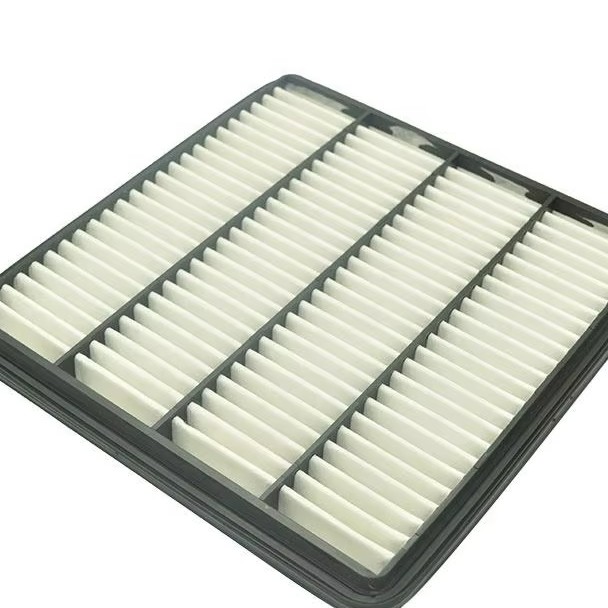
Medium-Efficiency Panel Frame Bag Filters: The Preferred Filtration Solution for the Medical and Food Industries
Medium-efficiency panel frame bag filters capture 1–5 μm particles and are essential for clean operating rooms and aseptic food filling, ensuring safety and quality.
- I. Product Definition and Technical Positioning
- II. Core Technical Parameters: Data-Driven Performance Analysis
- 2.1 Filtration Efficiency Grades
- 2.2 Filtration Area and Structural Design
- 2.3 Rated Air Volume
- 2.4 Dust Holding Capacity and Resistance Characteristics
- 2.5 Replacement Cycle Determination
- III. Medical Industry Applications: Rigid Demand for Clean Environments
- 3.1 Hospital Clean Operating Rooms and ICUs
- 3.2 Pharmaceutical GMP Workshops
- 3.3 Biosafety Laboratories
- IV. Food Industry Applications: Filtration Barriers for Aseptic Production
- 4.1 Aseptic Filling Workshops
- 4.2 Dairy Products and Baked Goods
- 4.3 Food Packaging and Cooling Tunnels
- V. Selection and Maintenance Considerations
Medium-Efficiency Panel Frame Bag Filters: The Preferred Filtration Solution for the Medical and Food Industries
In hospital clean operating rooms and aseptic food filling workshops, the reliability of air filtration systems directly affects product quality and patient safety. As a critical link in the air purification chain, medium-efficiency panel frame bag filters are responsible for capturing 1–5 μm particulate matter, making them an indispensable core component in the construction of clean environments for the medical and food industries. This article systematically explains why medium-efficiency panel frame bag filters have become the preferred filtration product for the medical and food industries, from the perspectives of technical parameters, performance data, and industry applications.
I. Product Definition and Technical Positioning
Medium-efficiency panel frame bag filters, also known as medium-efficiency bag filters or panel frame medium-efficiency filters, are air filtration devices that adopt a bag-type structure. Their core function is to capture 1–5 μm particulate dust and various suspended solids in the air, playing a “connecting” role in air purification systems.
From the perspective of filtration hierarchy, air purification systems typically adopt a three-stage filtration architecture: primary, medium, and high efficiency. Primary filters (panel type) mainly intercept large particulate dust above 5 μm, while medium-efficiency bag filters are responsible for fine particulate matter in the 1–5 μm range. This particle size range precisely covers the main pollutants that pose threats to medical and food production, including bacterial carriers, dust particles, and aerosols. For this reason, medium-efficiency filters are positioned as a key barrier to “protect the next-stage filter and the system itself.”
In cleanroom standards for the medical and food industries, medium-efficiency filters (typically F7–F9 grades) often serve as front-end protection for high-efficiency filters (H13–H14), effectively extending the service life of high-efficiency filters and reducing overall system operating costs. Taking a pharmaceutical GMP workshop as an example, its purification air conditioning system adopts a three-stage configuration of “primary → medium (F8) → high efficiency (H14),” with the medium-efficiency stage tasked with raising the filtration efficiency of 1–10 μm particulate matter in fresh air and return air to above 90%.
II. Core Technical Parameters: Data-Driven Performance Analysis
The performance of medium-efficiency panel frame bag filters depends on the precise matching of a set of core parameters. The following analysis is conducted from dimensions including filtration efficiency, filtration area, rated air volume, and dust holding capacity.
2.1 Filtration Efficiency Grades
According to the European EN779 standard and China’s GB/T 14295 standard, medium-efficiency filters are divided into five grades, F5 to F9, based on filtration efficiency. As measured by the colorimetric method, the filtration efficiency of each grade is as follows:
| Efficiency Grade | Filtration Efficiency for 1.0 μm Particles | Filtration Efficiency for 0.5 μm Particles | Typical Filter Media Color |
|---|---|---|---|
| F5 | 40%–45% | — | Earthy yellow |
| F6 | 60%–65% | — | Green |
| F7 | 80%–85% | — | Light pink |
| F8 | 90%–95% | — | Light yellow |
| F9 | — | 95% | White |
Data source: HPM panel-type medium-efficiency air filter product specifications and F7 medium-efficiency air filter technical parameters for the food industry.
As shown in the table, the filtration efficiency of F7 grade filters for 1.0 μm particles has reached 85%, a value sufficient to play an effective particulate interception role in medical operating rooms and food filling workshops. The F8 grade raises efficiency to 90%–95%, suitable for biopharmaceutical and fine food processing scenarios with more stringent cleanliness requirements.
2.2 Filtration Area and Structural Design
The core advantage of medium-efficiency panel frame bag filters lies in the large filtration area brought by their bag-type structure. Taking a common specification of 592×592×600 mm, 6 bags, F7 efficiency as an example, the filtration area of a single bag is approximately 0.8 m², and the total filtration area of 6 bags reaches 4.8 m².
The design logic of the bag-type structure is: by increasing the filtration area, the filtration velocity is reduced under the same air volume conditions, thereby reducing resistance and increasing dust holding capacity. Product documentation from Guohai Filter states that its bag filters have “large effective filtration area, large dust holding capacity, low resistance, and large ventilation volume.” The internal plastic-sprayed cold-drawn wire support frame design ensures that the filter bags maintain stable shape under airflow impact, avoiding adhesion between bags and maintaining a uniform air supply area.
2.3 Rated Air Volume
The rated air volume of medium-efficiency bag filters depends on the number of bags, length, and system design wind speed. The set wind speed for normal central air conditioning supply systems is 2.5 m/s. The formula for calculating rated air volume is:
Air Volume (m³/h) = Width × Height × Wind Speed (m/s) × 3600 seconds
Taking a 592×592 mm outer frame, 600 mm bag length, 6-bag filter as an example, if calculated at a wind speed of 2.5 m/s, the theoretical air volume is approximately 3155 m³/h. In actual selection, corrections must be made based on system resistance, bag length, and efficiency grade. Common bag lengths include 381 mm, 500 mm, 534 mm, and 600 mm.
2.4 Dust Holding Capacity and Resistance Characteristics
Dust holding capacity is the core indicator for measuring filter service life. Academic research data shows that the dust holding capacity of bag-type glass fiber filters is 4.3 times that of bag-type chemical fiber filters, and the dust holding capacity of bag-type chemical fiber filters is 1.7 times that of panel-type chemical fiber filters. This data reveals the significant advantage of the bag-type structure in dust holding capacity.
In terms of resistance characteristics, the initial pressure drop data of HPM panel-type medium-efficiency filters provides precise reference:
| Specification Model | Filtration Area | F5 Initial Pressure Drop | F7 Initial Pressure Drop | F8 Initial Pressure Drop |
|---|---|---|---|---|
| 595×595×46 mm | 0.9 m² | 40 Pa @ 500 m³/h | 70 Pa @ 500 m³/h | 100 Pa @ 500 m³/h |
| 595×595×90 mm | 1.8 m² | 40 Pa @ 1000 m³/h | 70 Pa @ 1000 m³/h | 100 Pa @ 1000 m³/h |
| 595×595×150 mm | 3.0 m² | 40 Pa @ 1700 m³/h | 70 Pa @ 1700 m³/h | 100 Pa @ 1700 m³/h |
It is worth noting that under the same air volume conditions, the initial pressure drop of the F5 grade is only about 40% of that of the F8 grade. This means that when designing the system, choosing a lower efficiency grade can reduce fan energy consumption, but a balance must be struck between filtration effectiveness and operating costs.
2.5 Replacement Cycle Determination
Under rated air volume operating conditions, the replacement cycle for medium-efficiency filters is typically 3–4 months. When the filter resistance reaches above 400 Pa, the filter must be replaced. This threshold is based on a comprehensive consideration of system energy consumption and filtration efficiency: after resistance exceeds 400 Pa, fan energy consumption rises significantly, and continued use will cause operating costs to exceed replacement costs.
III. Medical Industry Applications: Rigid Demand for Clean Environments
3.1 Hospital Clean Operating Rooms and ICUs
The medical industry’s demand for air filtration stems from the rigid requirement for infection control. Clean operating rooms must maintain specific suspended particle concentration limits to reduce surgical incision infection rates. According to relevant standards, operating room air purification systems typically adopt a three-stage configuration of “primary → medium → high efficiency,” with the medium-efficiency stage (F7–F8 grade) undertaking the key function of intercepting bacterial carrier particles.
Bacteria are usually attached to dust particles or droplet nuclei, with particle sizes mostly in the 1–5 μm range, which is precisely the effective capture range of medium-efficiency filters. Product documentation from Guohai Filter explicitly lists “pharmaceutical and medical” as core application areas for medium-efficiency panel frame bag filters.
3.2 Pharmaceutical GMP Workshops
In the Good Manufacturing Practice (GMP) system for drug production, air purification systems in clean areas have strict validation requirements. Taking a digital intelligent workshop as an example, its purification air conditioning system is designed according to GMP requirements, with air change rates greater than 15 times per hour. The medium-efficiency filter adopts F8 grade, achieving a filtration efficiency of over 90% for 1–10 μm dust particles.
Typical configurations for pharmaceutical medium-efficiency filters include: aluminum alloy profile outer frames, high-quality synthetic fiber or imported glass fiber filter media, and internally equipped plastic-sprayed cold-drawn wire support frames. This structure not only meets GMP requirements for equipment cleanliness but also ensures stability for long-term operation.
3.3 Biosafety Laboratories
In biosafety laboratories and PCR laboratories, medium-efficiency filters also play a key role. These locations have extremely high requirements for aerosol particle control. As front-end protection for high-efficiency filters, the stability of the medium-efficiency stage’s filtration efficiency directly relates to whether the terminal biosafety barrier is reliable.
IV. Food Industry Applications: Filtration Barriers for Aseptic Production
4.1 Aseptic Filling Workshops
Aseptic filling lines in the food and beverage industry have strict requirements for air cleanliness. The air in the filling area must pass through high-efficiency filtration before contacting products, and medium-efficiency filters serve as the front-end barrier to ensure stable performance of high-efficiency filters. By capturing 1–5 μm particulate matter, medium-efficiency panel frame bag filters effectively reduce the load on high-efficiency filters and extend their service life.
Product documentation from Asia-Pacific Group shows that panel-type medium-efficiency filters are “widely used in automobiles, pharmaceuticals, food, chemicals, hotels, and other industries, and can be used both as main filtration for general central air conditioning and as pre-filtration for downstream filters.”
4.2 Dairy Products and Baked Goods
The production environments for dairy products and baked goods have special requirements for microbial control. Medium-efficiency filters not only filter particulate matter but also indirectly reduce the concentration of microorganisms in the air—because most microorganisms are transmitted attached to particulate matter. Product introductions from Food Partner Network list “hospitals, pharmaceutical factories, electronics factories, paint booths” as application scenarios for medium-efficiency filters, emphasizing their characteristics of “high dust holding capacity, good air permeability, high filtration efficiency, and long service life.”
4.3 Food Packaging and Cooling Tunnels
In food packaging and cooling tunnel processes, air directly contacts product surfaces. The F7 grade (85% @ 1 μm) of medium-efficiency filters is sufficient to meet the purification needs of such scenarios, while their low resistance characteristics help reduce energy consumption in cooling systems.
V. Selection and Maintenance Considerations
5.1 Efficiency Grade Selection
For medium-efficiency filter selection in the medical and food industries, the efficiency grade must be determined according to cleanliness level requirements. General recommendations:
- Ordinary clean areas: F7 grade (85% @ 1 μm)
- Aseptic filling areas, operating rooms: F8 grade (90%–95% @ 1 μm)
- Biosafety laboratories: F9 grade (95% @ 0.5 μm)
5.2 Outer Frame and Filter Media Selection
Outer frame materials should be selected according to the use environment: aluminum profile frames are suitable for general environments, stainless steel frames are suitable for high-humidity or corrosive environments, and galvanized frames provide an economical solution. In terms of filter media, synthetic fiber non-woven fabric offers washability, while glass fiber provides higher temperature resistance (up to 70–80°C).
5.3 Installation and Maintenance Specifications
During installation, ensure that the length direction of the bag opening is perpendicular to the ground to ensure air supply effectiveness and extend service life. Seal inspection should focus on the sealing at the pressure edge between the filter and the frame to prevent air volume leakage. Regularly check the air inlet surface for debris blockage and the filter media surface for damage.
Regarding cleaning, washable filter media allow a maximum of two cleanings, after which new filter media must be replaced. During cleaning, use clean water or neutral detergent, and avoid using hot water above 50°C.
Please login to write a comment after