 English
 Español
 Français
 Italiano
 Deutsch
 日本語
 Русский
 العربية
 Português
 Svenska

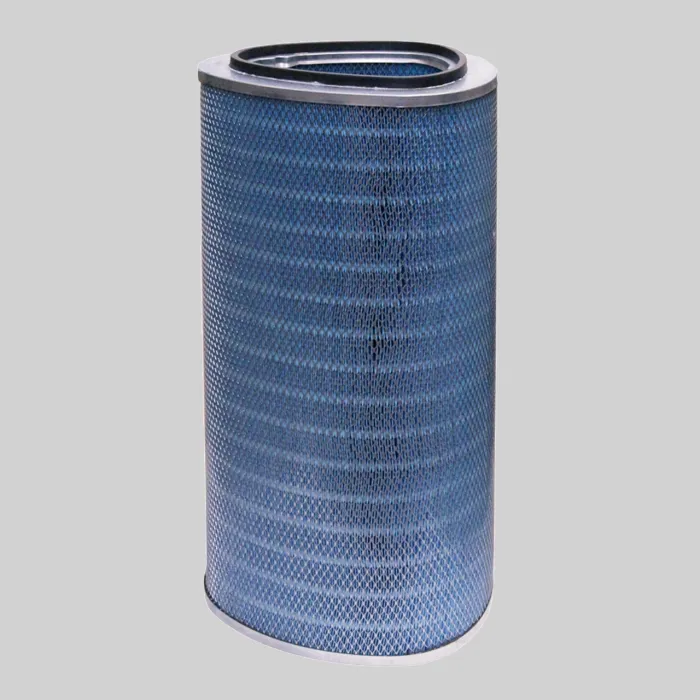
In-Depth Comparison of Baghouse Dust Collectors and Cartridge Dust Collectors
This comparison analyzes technical parameters and applications of baghouse and cartridge dust collectors to guide informed equipment selection.
- I. Technical Principles and Structural Differences
- II. Comparison of Key Technical Parameters
- 2.1 Dust Removal Efficiency
- 2.2 Filtration Velocity
- 2.3 Equipment Resistance
- 2.4 Air Leakage Rate
- 2.5 Temperature Resistance
- III. Structural and Economic Comparison
- IV. Applicable Working Conditions and Selection Recommendations
- 4.1 Advantageous Working Conditions for Cartridge Dust Collectors
- 4.2 Advantageous Working Conditions for Baghouse Dust Collectors
- 4.3 Consideration of Special Working Conditions
- V. Conclusion: Which Performs Better?
In-Depth Comparison of Baghouse Dust Collectors and Cartridge Dust Collectors: A Comprehensive Analysis from Technical Parameters to Selection Decisions
Baghouse dust collectors and cartridge dust collectors are the two most common types of filtration-based equipment in the industrial dust removal field. When selecting equipment, many people ask “which one performs better,” but there is no universal answer to this question—both can achieve dust removal efficiencies above 99%. The real differences lie in filtration principles, structural characteristics, and applicable working conditions. The following analysis examines technical parameters and practical applications to help you make informed decisions in specific scenarios.
I. Technical Principles and Structural Differences
1.1 Working Principle of Baghouse Dust Collectors
Baghouse dust collectors use filter bags made of materials such as cotton, wool, or synthetic fibers woven into fabric bags. When dust-laden gas passes through the filter bags, dust particles are retained on the surface of the filter material. The filtration mechanism includes a combination of effects: sieving, inertial impaction, interception, diffusion, electrostatic attraction, and gravitational settling.
A key characteristic of baghouse dust collectors is the depth filtration principle. New filter bags have relatively large mesh openings, generally 20-50μm, or 5-10μm for surface-napped filter media. At the initial stage, dust removal efficiency is relatively low, but as dust forms a “primary dust layer” on the filter material surface, filtration efficiency increases dramatically. This primary dust layer becomes the main filtration layer, while the filter cloth itself merely serves a supporting role.
The structural characteristic of baghouse dust collectors is the use of soft filter media sewn into filter bags, which are fitted over welded steel wire cages (commonly known as skeleton frames), with filter bags arranged densely in a vertical configuration.
1.2 Working Principle of Cartridge Dust Collectors
Cartridge dust collectors use hard filter media folded into cylindrical shapes, with no skeleton structure, and relatively large spacing between cartridges. Their filtration principle is surface filtration—dust is primarily purified by the surface pores of the filter material, without penetrating deep into the filter medium.
After dust-laden gas enters the dust collector hopper, the sudden expansion of the airflow cross-section and the action of the airflow distribution plate cause coarse particles to settle under gravity and inertial forces. Fine particles with small particle size and low density enter the filter chamber and are deposited on the filter material surface through combined effects such as Brownian diffusion and sieving. The purified gas enters the clean air chamber and is discharged.
The folded structure of cartridges provides a larger filtration area per unit volume, which is the core advantage of the compact design of cartridge dust collectors.
II. Comparison of Key Technical Parameters
2.1 Dust Removal Efficiency
| Parameter | Cartridge Dust Collector | Baghouse Dust Collector |
|---|---|---|
| Dust removal efficiency | 99.7%-99.9% | 99%-99.5% |
| Emission concentration | Can be stably controlled below 10mg/m³ | Generally can reach below 15mg/m³ |
| For 0.5μm particles | >99.9% | — |
| For 1μm particles | — | >99.5% |
| Applicable dust concentration | Suitable for high-concentration conditions | Not suitable for high-concentration conditions |
From the data, cartridge dust collectors have slightly higher dust removal efficiency than baghouse dust collectors. High-quality cartridges with PTFE membrane treatment can achieve over 99.99% capture efficiency for ultrafine dust particles above 0.3 micrometers, with emission concentrations stably controlled at extremely low levels. In actual testing, when processing cement powder, cartridge equipment outlet emission concentrations are stable below 10mg/m³, while baghouse equipment typically reaches 15-20mg/m³.
Baghouse dust collectors also have good dust removal performance. For particles above 1μm, inertial impaction is the main mechanism; for particles below 1μm, diffusion is the main mechanism. Total filtration efficiency can reach over 99%. However, precise selection of filter material is required to achieve emission levels comparable to cartridge collectors.
2.2 Filtration Velocity
Filtration velocity is one of the key parameters in dust collector selection.
Filtration velocity for cartridge dust collectors is determined by inlet dust concentration:
- When inlet dust concentration is 15-30g/m³, filtration velocity should not exceed 0.6-0.8m/min
- When inlet dust concentration is 5-15g/m³, filtration velocity should not exceed 0.8-1.2m/min
- When inlet dust concentration is ≤5g/m³, filtration velocity should not exceed 1.5-2m/min
Filtration velocity for baghouse dust collectors is generally 0.2-6m/min. Practice shows that for fine dust filtration, smaller values should be used (approximately 0.6-1.0m/min), while for coarse dust filtration, approximately 2m/min should be used.
2.3 Equipment Resistance
Cartridge dust collectors have relatively low operating resistance. According to product technical parameters, equipment resistance under general dust conditions is approximately 700-1000Pa, with terminal pressure of approximately 1500Pa.
Baghouse dust collector resistance is greatly affected by the cleaning cycle. Taking the MC series pulse bag filter as an example, pressure loss during normal filtration is controlled at 120-150mmH₂O (approximately 1200-1500Pa). Due to the length of filter bags and uneven backwashing, resistance fluctuations are more pronounced, sometimes reaching 2000Pa.
2.4 Air Leakage Rate
Cartridge dust collectors have fewer equipment openings, with air leakage rates below 4%; baghouse dust collectors have more openings, with air leakage rates of approximately 5% or higher. Lower air leakage rates mean cartridge dust collectors have advantages in energy consumption control.
2.5 Temperature Resistance
| Type | Conventional Material | Special Material |
|---|---|---|
| Cartridge Dust Collector | ≤120℃ | Special materials can reach 260℃ |
| Baghouse Dust Collector | ≤260℃ (fiberglass bags) | Maximum 300℃ |
Baghouse dust collectors have significant advantages in high-temperature conditions, making them more suitable for high-temperature flue gas treatment scenarios such as steel sintering (280℃) and cement kiln tail (260℃).
III. Structural and Economic Comparison
3.1 Footprint and Filtration Area
Cartridge dust collectors use folded cartridge structures, providing 3 to 5 times the filtration area per unit volume compared to traditional bags. A specific case illustrates this: when handling 10,000 CFM airflow, a baghouse dust collector requires 2,500 square feet of filter cloth at an air-to-cloth ratio of 4:1; while a cartridge dust collector requires 6,667 square feet of filtration area at an air-to-cloth ratio of 1.5:1. However, since a single pleated cartridge can provide 250 square feet of surface area, only 27 cartridge elements are needed.
This means that at the same processing airflow, cartridge dust collectors have significantly smaller equipment volume and footprint than baghouse dust collectors, saving over 50% of installation space. Baghouse dust collectors are bulky and heavy, requiring larger equipment layout space, with approximately 3 meters of overhead space required for bag removal during maintenance.
3.2 Maintenance and Replacement
| Comparison Item | Cartridge Dust Collector | Baghouse Dust Collector |
|---|---|---|
| Replacement method | No tools required, easy assembly and disassembly | Requires crawling inside equipment, cumbersome operation |
| Replacement time | Approximately 20 minutes per cartridge | Large multi-compartment dust collectors may take several days to replace all bags |
| Wear conditions | No mechanical wear | Filter bags rub against cages, severe damage |
| Secondary pollution | None | Generated during replacement |
Cartridges experience no mechanical wear during continuous movement and backwashing, resulting in longer service life, sometimes lasting several years. Filter bags and cages rub against each other during operation and backwashing, causing severe damage and requiring frequent replacement.
3.3 Economic Analysis
Initial investment: For applications below 15,000 CFM, cartridge dust collectors typically cost 15% to 30% less to purchase and transport than baghouse dust collectors, thanks to their smaller frame dimensions and factory-prefabricated modular construction.
Operating energy consumption: Cartridge dust collectors have low resistance and small air leakage rates, so main fans consume less airflow and pressure, saving electricity; compressed air usage is small and pressure requirements are low. Baghouse dust collectors have high resistance and large air leakage rates, consuming more electricity; backwash fans and rotary arms are all power-consuming equipment.
Filter media replacement costs: Cartridge elements have higher unit prices ($120-250 each), while standard filter bags have lower unit prices ($25-60 each). However, the maintenance labor required for cartridge replacement is approximately 70% less, reducing downtime.
IV. Applicable Working Conditions and Selection Recommendations
4.1 Advantageous Working Conditions for Cartridge Dust Collectors
Cartridge dust collectors are particularly suitable for the following scenarios:
- Welding fume treatment: Capturing welding fume, grinding particles, and metal dust
- Food processing: Collection of fine dust from flour, sugar, spices, etc.
- Pharmaceutical industry: Containment of hazardous drug powders and cleanroom air purification
- Battery manufacturing: Fine particulate matter control in lithium-ion and lead-acid battery production
- Electronics and semiconductors: Protecting sensitive equipment from airborne dust contamination
- Space-constrained situations: Old workshop renovations or new projects with limited space
Cartridge dust collectors are suitable for processing dry, fine, low-to-medium concentration dust, as well as working conditions requiring high filtration precision. In precision manufacturing fields such as lithium battery materials and pharmaceuticals requiring nanoscale filtration (dust <5μm), as well as space-constrained scenarios such as shipbuilding welding and workshop renovations, cartridge dust collectors are the preferred choice.
4.2 Advantageous Working Conditions for Baghouse Dust Collectors
Baghouse dust collectors have more advantages in the following scenarios:
- High-temperature flue gas: Steel sintering (280℃), cement kiln tail (260℃)
- High-concentration dust: Mineral powder processing (>50g/m³), cement kiln tail (1000g/m³)
- Corrosive environments: Waste incineration (HCl resistant), chemical plants (acid-alkali resistant bags)
- Explosive dust: Higher safety when handling dust with explosion risks or sparks
The modular design of baghouse dust collectors allows maintenance or replacement of some filter bags without stopping operations, making them suitable for large centralized dust removal systems.
4.3 Consideration of Special Working Conditions
In actual engineering, combined processes are sometimes used. For example, one project used a “baghouse dust collector + cartridge dust collector” process to treat lead fume and lead dust, controlling organized emission concentrations below 0.5mg/m³, meeting the requirements of the “Battery Industry Pollutant Emission Standards.” Steel enterprises have also adopted “bag + cartridge” series solutions, with emission concentrations controlled below 5mg/m³.
V. Conclusion: Which Performs Better?
From a purely technical standpoint, cartridge dust collectors have clear advantages in dust removal efficiency (99.7%-99.9% vs 99%-99.5%), footprint (saving over 50%), air leakage rate (<4% vs ≥5%), and maintenance convenience.
However, “better” depends on specific working conditions:
- Choose cartridge dust collectors: When processing dry fine dust, with limited space, requiring high filtration precision, and needing frequent filter replacement
- Choose baghouse dust collectors: When processing high-concentration coarse particle dust, high-temperature flue gas, explosive dust, and requiring large centralized dust removal systems
From the perspective of industry development trends, driven by continuously tightening environmental standards and the refined transformation of manufacturing, cartridge dust collectors are replacing traditional baghouse dust collectors at an extremely high penetration rate, becoming the preferred solution for workshops generating fine dust in welding, grinding, and powder processing. However, baghouse dust collectors still hold an irreplaceable position in heavy industry.
During selection, comprehensive consideration should be given to dust characteristics (particle size, concentration, temperature, humidity, corrosiveness, explosiveness), site conditions, maintenance capabilities, investment budget, and operating costs. When necessary, consult professional dust removal equipment suppliers for customized solution design.
Please login to write a comment after