 English
 Español
 Français
 Italiano
 Deutsch
 日本語
 Русский
 العربية
 Português
 Svenska

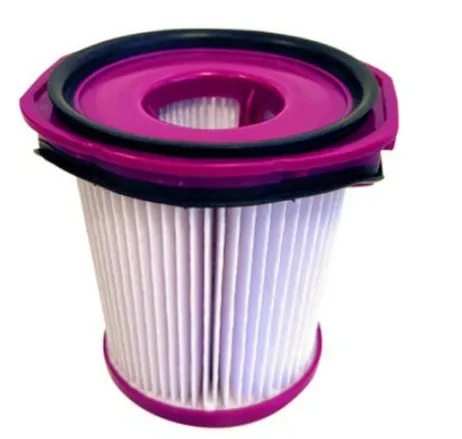
How Vacuum Cleaner Filters Work: From Physical Interception to 99.995% Filtration Efficiency
Filtration efficiency hinges on pore size, fiber density, and seal design, with HEPA H13 and H14 capturing 99.95% to 99.995% of 0.15–0.30 micron particles.
- Core Conclusion
- I. Why Do Filters Need a “Multi-Stage Structure”?
- II. Core Filtration Mechanisms: How Are Particles “Caught”?
- III. Quantifying Filtration Efficiency: What Does “95%” vs. “99.995%” Actually Mean?
- 3.1 Industrial Vacuum Standards: L, M, and H Grades
- 3.2 HEPA Standards: The Rigorous Logic of MPPS Testing
- IV. The Synergy Between Pre-Filtration and Main Filtration: An Underappreciated Design
- V. What the Data Really Means in Practice
- Conclusion
How Vacuum Cleaner Filters Work: From Physical Interception to 99.995% Filtration Efficiency
Core Conclusion
The essence of a vacuum cleaner filter is a multi-stage physical interception system. Its working principle can be summarized in three layers: coarse pre-filtration intercepts large particles, the core filter media captures micron-sized particles, and the sealing structure prevents leakage. Filtration efficiency depends on the pore size of the filter media, fiber density, and seal design. According to the European standard EN 1822-1, high-end HEPA filters can achieve 99.95% (H13 grade) or even 99.995% (H14 grade) filtration efficiency for the hardest-to-capture particles in the 0.15–0.30 micron range. In contrast, ordinary vacuum filter media capture approximately 95% of particles above 0.5 microns, meaning roughly 5% of fine dust is released back into the room.
I. Why Do Filters Need a “Multi-Stage Structure”?
If you disassemble a modern vacuum cleaner filter assembly, you will typically find that it is not a single material but consists of three parts: a pre-filter layer, a core filtration layer, and a sealing structure. This design is not a marketing gimmick—it is dictated by physics.
A typical filter structure, as described in patent literature, features a pre-filter porous panel on the housing, with a pore size significantly larger than that of the internal filter medium. The difference between the two “may be on the order of multiple magnitudes.” This pore size difference is deliberate—the pre-filter panel intercepts large debris and hair, while the core filter media focuses on capturing fine dust that penetrates the pre-filter layer.
Why this layering? The reason is straightforward: if all particles were allowed to strike the core filter media directly, the filter would clog in a very short time, suction would drop sharply, and users would have to replace it frequently. The pre-filter layer acts as a “buffer zone” for the core media.
A deeper design element lies in the airflow path switching mechanism. As the pre-filter panel gradually becomes clogged with debris and airflow resistance increases, the air automatically redirects through another set of pre-filter panels (e.g., on the end wall), thereby extending the filter’s overall service life. This passive “redundant design” allows the filter to maintain a certain level of airflow capacity under varying contamination levels.
From a commercial perspective, this multi-stage structure also explains why filters represent a continuously growing consumables market. The global vacuum cleaner filter market is projected to maintain a compound annual growth rate of approximately 4.2% from 2026 to 2035, with HEPA/ULPA types accounting for approximately 45% of the market share in 2025.
II. Core Filtration Mechanisms: How Are Particles “Caught”?
The ways a filter captures particles are far more complex than simply “sifting sand like a sieve.” In reality, modern filter media rely on four physical mechanisms working in concert, each targeting different particle sizes.
2.1 Interception
When a particle travels with the airflow and its centerline passes within one particle radius of a fiber surface, the particle directly “hits” the fiber and adheres to it. This mechanism is most effective for medium-sized particles (approximately 0.5–1 micron).
2.2 Inertial Impaction
Larger particles (typically above 1 micron) have greater inertia. When airflow bends around a fiber, these particles cannot follow the airstream’s change in direction and instead continue in a straight line, striking the fiber. The larger the particle and the faster the airflow, the higher the inertial impaction efficiency.
2.3 Diffusion
This is the most counterintuitive mechanism. Extremely small particles (typically below 0.1 micron) undergo Brownian motion—random movement within the airflow—which actually increases their probability of colliding with fibers. This means that for the tiniest particles, filter efficiency increases rather than decreases.
2.4 Electrostatic Attraction
Many filter media carry a permanent electrostatic charge or are electret-treated, attracting charged particles through Coulomb forces. This mechanism is particularly effective for particles in the 0.1–0.5 micron range.
The combined effect of these four mechanisms leads to a key conclusion: the particles hardest for a filter to capture are neither the largest nor the smallest, but those in the 0.15–0.30 micron range. This is the so-called Most Penetrating Particle Size (MPPS). This is why the EN 1822 standard uses MPPS as the baseline particle size for testing filter efficiency—if a filter can efficiently intercept this “most difficult” size, it will naturally perform even better against other sizes.
The problem with old vacuum filters often lies here. Technical documentation shows that the “mesh” of ordinary filter bags is not uniform—some pores are small, others large. Particles below 0.5 microns “pass through almost entirely,” and even for particles above 0.5 microns, approximately 3–5% escape through larger pores. This explains why the exhaust air from vacuum cleaners using inferior or aged filters can still contain measurable concentrations of fine dust.
III. Quantifying Filtration Efficiency: What Does “95%” vs. “99.995%” Actually Mean?
Without qualifying conditions, a “filtration efficiency” number is almost meaningless. The gap between a filter with 95% efficiency and one with 99.995% efficiency can translate into a hundredfold difference in emissions during everyday use.
3.1 Industrial Vacuum Standards: L, M, and H Grades
According to the European standard DS/EN 60335-2-69, vacuum filters are classified into three levels based on protection against hazardous dust:
| Grade | Filtration Efficiency | Applicable Dust Concentration Limit |
|---|---|---|
| L | > 99% | > 1 mg/m³ |
| M | > 99.9% | > 0.1 mg/m³ |
| H | > 99.995% | < 0.1 mg/m³ (including carcinogenic/pathogenic substances) |
L and M grades are tested using 200 mg/m³ quartz dust, of which at least 90% of particles fall between 0.2–2 microns. H grade is tested using paraffin oil aerosol, with finer particles—90% below 1 micron. The numerical differences appear small, but between 99.9% and 99.995%, the penetration rate differs by a factor of 50.
3.2 HEPA Standards: The Rigorous Logic of MPPS Testing
EN 1822-1 provides even finer classification for HEPA filters:
| Grade | Type | Overall Filtration Efficiency |
|---|---|---|
| E10 | EPA | 85% |
| E11 | EPA | 95% |
| E12 | EPA | 99.5% |
| H13 | HEPA | 99.95% |
| H14 | HEPA | 99.995% |
| U15 | ULPA | 99.9995% |
Notably, EN 1822 assesses not only overall efficiency but also local efficiency. For H13, the overall efficiency must reach 99.95%, while the local efficiency at the MPPS particle size must not fall below 99.75%. This means a filter cannot pass by relying on an “average score”—any localized leak will result in failure.
IV. The Synergy Between Pre-Filtration and Main Filtration: An Underappreciated Design
Returning to the patent structure mentioned earlier: the pore size difference between the pre-filter panel and the core filter media “may be very large, for example, differing by multiple orders of magnitude.” Behind this design lies a key trade-off logic.
The purpose of pre-filtration is to exchange the minimum airflow resistance for the maximum interception of large particles. If the pre-filter pore size is too small, it becomes a high-resistance layer itself, reducing suction; if too large, large particles strike the core filter media directly, accelerating clogging.
In actual products, this synergy is further optimized through a dual airflow path design. Under normal conditions, air primarily enters through the side-wall pre-filter panels; when the side walls gradually become covered with debris and resistance increases, airflow redirects through the end-wall panels. Users may never notice this switching, but the filter’s overall lifespan is significantly extended as a result.
Experimental data on a dual-filter design corroborates the value of this structure: when two fine-mesh filters of similar performance are connected in series, particles that penetrate the first stage are captured by the second stage, resulting in an overall “improvement” in capture efficiency. In a multi-stage filtration system, each stage’s “escapees” become the next stage’s “raw material,” and the system’s total penetration rate is the product of each stage’s penetration rate. This is why the leap from 95% to 99.995% translates into a world of difference in exhaust air cleanliness during everyday use.
V. What the Data Really Means in Practice
Understanding filter principles and data ultimately comes down to one practical question: What does this mean for choosing and using a vacuum cleaner?
First, focus on MPPS efficiency, not simplistic claims about “filtering 0.3-micron particles.” Manufacturers often claim “filters 0.3-micron particles,” but 0.3 microns sits near the upper edge of the MPPS range. What truly tests a filter is its penetration rate in this “hardest zone.” An H13-grade filter has a local efficiency of no less than 99.75% at MPPS, while ordinary “HEPA-style” filter paper may achieve only 90% or even less.
Second, sealing may matter more than the filter media itself. Even if the filter media reaches H13 grade, if the seal between the filter and the vacuum body is imperfect, unfiltered air will bypass the entire filtration system and exit directly. A standard specifically addressing household vacuum cleaners, ASTM F3150-18, emphasizes evaluation of the complete filtration system rather than testing the filter media alone. This means that when replacing a filter, ensuring proper installation and intact sealing gaskets is just as important as the filter’s quality.
Third, there is a fundamental difference between “washable” and “restorable.” While washing the pre-filter layer can indeed restore some airflow capacity, once the microscopic fiber structure of the core filter media becomes embedded with particles or its electrostatic layer is compromised, its filtration efficiency irreversibly declines. For H-grade or H13-grade filters, it is virtually impossible to restore original factory efficiency after washing.
Fourth, market trends are shifting toward higher efficiency. North America accounted for approximately 48% of the global HEPA vacuum filter market in 2025, driven primarily by strict indoor air quality regulations. The commercial sector accounts for 42% of the application market, while biological cleanliness (laboratories, healthcare) is the fastest-growing segment, with a projected CAGR of 10.5%. This means the technological floor for household vacuum filters will continue to rise.
Conclusion
The working principle of a vacuum cleaner filter ultimately comes down to precision screening of particles across different size ranges. The pre-filter layer handles “blocking the large,” the core filter media handles “catching the small,” and the sealing structure handles “preventing leakage.” The data tells us that the leap from 95% to 99.995% efficiency is not a simple numbers game but a quantum leap in penetration rate—from “five escaping out of every hundred” to “five escaping out of every hundred thousand.” Understanding this, you can appreciate why some filters cost ten times more than ordinary products—what you are paying for, in essence, is the “invisible cleanliness” at the exhaust end.
Please login to write a comment after