 English
 Español
 Français
 Italiano
 Deutsch
 日本語
 Русский
 العربية
 Português
 Svenska

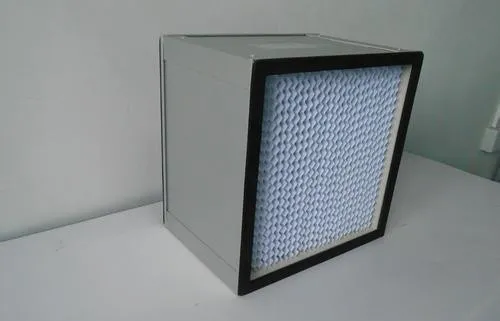
HEPA High-Efficiency Particulate Air Filters
HEPA filters use ultra-fine fibers to capture airborne particles via impaction, diffusion, settling, and interception, with 0.3 μm as the most penetrating size.
HEPA High-Efficiency Particulate Air Filters
Principles · Standards · Applications
As modern industry and quality of life standards continue to rise, air quality has become a global focal point. In the emerging “nanometer era,” submicroscopic airborne particles pose increasingly significant challenges to precision manufacturing, biopharmaceuticals, and public health. HEPA (High-Efficiency Particulate Air) filters, recognized as one of the most effective filtration media available today, have become the cornerstone of clean air technology.
1. Core Definition and Filtration Principles
A HEPA filter is a dry-type filtration device designed to capture airborne particulate matter with exceptionally high efficiency. The core filter media typically consists of ultra-fine glass fibers or synthetic fibers folded through specialized processes, forming a dense, multi-layered fibrous maze.
The filtration mechanism is not a simple “sieve” interception but a synergistic combination of multiple physical effects:
- Inertial Impaction: Larger particles, due to their momentum, deviate from the airflow streamlines and collide with, then adhere to, the fiber surfaces.
- Diffusion Effect: Extremely fine particles (e.g., <0.1 μm) undergo random Brownian motion in the airflow, increasing the probability of collision and capture by fibers.
- Gravitational Settling: Some high-density particles settle naturally due to gravity as they pass through the filter media.
- Direct Interception: Particles with diameters larger than the gaps between fibers are directly trapped.
2. Performance Grading and Technical Standards
Internationally, the primary classification system is based on the European standard EN 1822 (currently transitioning to ISO 29463). This standard employs particle counting methods, testing not only overall efficiency but also performing point-by-point scanning leak tests to ensure filter integrity.
Under the current standards, filters are categorized into three main classes by efficiency: EPA (Efficient Particulate Air), HEPA (High-Efficiency Particulate Air), and ULPA (Ultra-Low Penetration Air). The specific grading for HEPA filters is as follows:
| Grade (EN 1822) | Overall Efficiency (0.3 μm) | Local Efficiency (Scan) | Typical Applications |
|---|---|---|---|
| H10 | ≥ 85% | N/A | General industrial cleaning |
| H11 | ≥ 95% | N/A | Food & cosmetics manufacturing |
| H12 | ≥ 99.5% | N/A | Pharmaceutical & electronics plants |
| H13 | ≥ 99.97% | ≥ 99.97% | Operating rooms, cleanrooms, premium purifiers |
| H14 | ≥ 99.99% | ≥ 99.99% | Biological labs, semiconductor fabs |
Source: EN 1822 / ISO 29463 standards
H13 grade, with a minimum filtration efficiency of 99.97% against 0.3-micron particles (meaning only 3 particles out of 10,000 may pass through), is widely recognized as “medical grade” and is regarded as the gold standard in both premium residential air purifiers and healthcare applications.
3. Key Performance Parameters and Supporting Data
In practical engineering selection, beyond efficiency ratings, the following core parameters must be considered:
Initial Resistance (H13, 0.5 m/s)
Final resistance: 400–440 Pa
Rated Airflow (610×610×50 mm)
Dust capacity ≈ 450 g
Leak Limit (H13/H14)
PAO aerosol scan test
- Resistance (Pressure Drop): Initial resistance refers to the pressure drop of a new filter at rated airflow, while final resistance is the threshold at which replacement is recommended. Excessive resistance significantly increases fan energy consumption.
- Dust Holding Capacity and Airflow Rating: Corrugated or V-bank structural designs significantly increase filtration area and dust capacity. For instance, a standard 610×610×50 mm H13 filter has a rated airflow of approximately 800 m³/h and a dust holding capacity of about 450 grams, while deeper V-bank filters can achieve airflow rates exceeding 3500 m³/h and dust capacities over 2000 grams.
- Leak Testing: As per ISO 14644‑3 and U.S. NIH guidelines, installed HEPA filters must undergo integrity leak testing (typically using PAO aerosol challenge). For H13 grade and above, it is stipulated that no single point leak may exceed 0.01% of the upstream concentration.
4. Wide-Ranging Applications
HEPA filters, owing to their high efficiency and stable performance, are extensively employed in environments demanding strict air cleanliness, including:
- Biopharmaceuticals & Healthcare — Operating rooms, ICUs, sterile production lines
- Precision Electronics & Semiconductors — Chip fabrication, LCD manufacturing
- Food & Cosmetics — Ensuring microbial and particulate control
- Residential & Commercial — Premium air purifiers, vacuum cleaners, HVAC
5. Conclusion
HEPA high-efficiency filters are the bedrock of modern clean air technology. Understanding their ≥99.97% filtration efficiency against 0.3-micron particles, their H13/H14 grading under EN 1822 standards, and their critical parameters of resistance and dust holding capacity is essential for proper selection and assured air quality.
As technical standards harmonize globally (ISO 29463) and clean air requirements continue to escalate, HEPA filtration technology will play an increasingly vital role in safeguarding both industrial production and public health.
Please login to write a comment after