 English
 Español
 Français
 Italiano
 Deutsch
 日本語
 Русский
 العربية
 Português
 Svenska

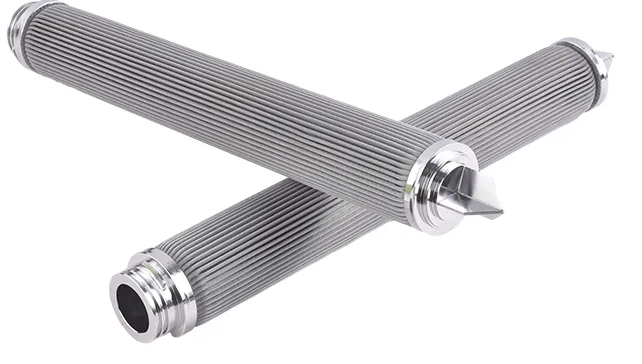
Metal Mesh Filter Elements: A Data-Driven Analysis of Application Scenarios
Metal sintered mesh filters growing at 10.8% CAGR, reaching $2.28B by 2025 worldwide.
- Abstract
- I. Market Size: A Rapidly Expanding Billion-Dollar Track
- II. Hydraulic and Fluid Power Systems: The Bedrock of Metal Mesh Filter Elements
- III. Petrochemical and Refining: Breakthrough from “Unable to Operate” to “Longer Backwash Cycles”
- IV. Pharmaceutical and Biopharmaceutical: From “Compliance Burden” to “Engineered Control Surface”
- V. Food and Beverage: The Invisible Guardian of Quality Consistency
- VI. Nuclear Power and Aerospace: The Only Choice Under Extreme Conditions
- VII. Emerging Applications and Market Drivers
- Conclusion
Metal Mesh Filter Elements: A Data-Driven Analysis of Application Scenarios
Abstract
Metal mesh filter elements are high-end filtration components that use stainless steel wire mesh, sintered metal mesh, or wedge wire as their core filtration media. With characteristics including high-temperature resistance, high-pressure resistance, corrosion resistance, and repeated cleaning and regeneration capability, they are evolving from auxiliary industrial components into critical process components in high-end manufacturing flows. Based on industry market data, technical parameters, and typical application cases, this article systematically examines the application scenarios of metal mesh filter elements in hydraulic systems, petrochemicals, pharmaceuticals, food and beverage, nuclear power, and aerospace, using tabulated data as core support.
I. Market Size: A Rapidly Expanding Billion-Dollar Track
The market volume of metal mesh filter elements far exceeds common perception. According to an industry report published by Global Environmental Protection Research Network, the global mesh filter market is projected to reach US$18.76 billion in 2026, with metal mesh filters holding the largest share at US$7.25 billion in global sales, accounting for 38.6%, primarily serving the aerospace and heavy machinery sectors. Focusing on the metal sintered mesh filter segment, the global market size was approximately US$1.85 billion in 2023, projected to grow to US$2.28 billion by 2025, with a compound annual growth rate of 10.8%. The disc metal filter market was valued at US$176 million globally in 2024, projected to reach US$263 million by 2031, with a CAGR of 6.0%.
In terms of regional structure, the Asia-Pacific region, particularly the Chinese market, is becoming the core engine of global growth. In 2023, China’s metal sintered mesh filter market reached US$460 million, and is expected to exceed US$680 million by 2026, with its share of the global market rising to over 30%. In the 2025 global mesh filter market, China holds a 34.2% share, approximately US$2.99 billion. Driven by increasingly stringent environmental regulations and upgrading demand for industrial precision filtration, the global market is expected to exceed US$14.25 billion by 2030, with a compound annual growth rate of approximately 10.4% from 2025 to 2030. Chinese domestic enterprises have formed cluster advantages in the low-cost metal filter mesh sector, with the domestic substitution rate rising to 73.5% in 2025, and overall industry capacity utilization increasing from 78.3% in 2024 to 81.6% in 2025.
II. Hydraulic and Fluid Power Systems: The Bedrock of Metal Mesh Filter Elements
Hydraulic systems represent the most traditional and core application area for metal mesh filter elements. Product documentation from Filtration (Feichao) explicitly states that metal mesh wound filter elements are “very suitable for hydraulic filtration,” with filtration precision covering 2 to 500 microns, operating temperature ranging from -269°C to 650°C, and diameters customizable from 2mm to 250mm. Stainless steel hydraulic filter elements achieve a filtration ratio β₃ ≥ 1000, meaning interception efficiency for particles above 3 microns exceeds 99.9%, regeneration capability reaches over 90%, rated flow range is 80-200 L/min, working pressure is 1.5-2.5 MPa, and filtration area is 0.01-0.20 m².
In extreme working conditions such as underground coal mines, the pressure resistance and anti-contamination capability of metal mesh filter elements are particularly critical. Research on high-pressure automatic backwash filtration devices for underground coal mines shows that after adopting metal mesh sintered felt filter elements, filtration precision reaches 25 microns, and maximum flow rate exceeds 100 L/min.
Table 1: Technical Parameters of Metal Mesh Filter Elements for Hydraulic Systems
| Parameter | Value Range | Notes |
|---|---|---|
| Filtration precision | 2–500 μm | Feichao product specifications |
| Operating temperature | -269°C to 650°C | Full temperature spectrum coverage |
| Filtration ratio β₃ | ≥1000 | >99.9% interception for 3μm particles |
| Regeneration capability | ≥90% | Repeated cleaning and recovery |
| Rated flow | 80–200 L/min | Stainless steel hydraulic filter elements |
| Working pressure | 1.5–2.5 MPa | Standard operating conditions |
| Filtration area | 0.01–0.20 m² | Per filter element |
| Underground coal mine precision | 25 μm | Sintered felt filter elements |
| Underground coal mine max flow | >100 L/min | Backwash filtration device |
III. Petrochemical and Refining: Breakthrough from “Unable to Operate” to “Longer Backwash Cycles”
Petrochemicals is one of the fields where the technical value of metal mesh filter elements is most prominently demonstrated. Test data from the Shengli Refinery of Qilu Petrochemical Company holds important reference value: in a wax oil hydrocracking unit, comparing wound wire tube and metal wire mesh filters, results showed that “when filtering reduced-pressure wax oil, both filters were acceptable, and metal wire mesh filter elements had longer backwash cycles“; however, when filtering reduced-pressure residue oil, “neither filter could operate normally.” This case reveals the boundary of advantage for metal mesh filter elements under specific working conditions.
In broader petrochemical process filtration, application data for multi-layer sintered mesh filter elements also merits attention. Product specifications from Xi’an Filter Metal Filtration Material Company show that its multi-layer sintered mesh filter elements achieve filtration precision of ≥1 micron, with outer diameters ranging from 10mm to 160mm and lengths from 50mm to 1200mm, suitable for oil sand separation, chemical industry complete equipment process filtration, high-temperature gas dust removal, and filtration of various high-temperature corrosive solutions in petrochemicals.
Table 2: Application Data of Metal Mesh Filter Elements in Petrochemicals
| Application Scenario | Filtration Precision | Key Parameters | Performance |
|---|---|---|---|
| Wax oil hydrocracking (comparative test) | — | Wound wire vs. metal wire mesh | Metal wire mesh has longer backwash cycles |
| Reduced-pressure residue oil filtration | — | Comparative test | Neither filter operates normally |
| Multi-layer sintered mesh (Filter) | ≥1 μm | OD 10–160mm, length 50–1200mm | Full precision spectrum coverage |
IV. Pharmaceutical and Biopharmaceutical: From “Compliance Burden” to “Engineered Control Surface”
In active pharmaceutical ingredient (API) production, metal mesh filter elements are being upgraded from an optional solution to a critical component of process control. The fundamental problem facing traditional synthetic fiber filter media in Nutsche drying filtration systems is that under pressure and vacuum cycling, agitator torque, and repeated cleaning, synthetic media undergo stretching, bending, or pore size distortion, resulting in unpredictable filter cake structure that directly affects washing efficiency and final product purity.
The technical advantages of metal sintered mesh filter plates are highlighted in this context. According to technical analysis by HAVER & BOECKER, metal wire mesh filter plates are diffusion-bonded from multiple layers of woven mesh into a single rigid structure, with metallurgical bonding at each wire mesh intersection, causing the filter plate to behave as a single component rather than a fiber assembly. Its core advantages include: true surface filtration rather than depth interception, with particles retained on the filter plate surface rather than migrating into the internal matrix; resistance to high-torque reslurry washing, drying temperatures, and repeated exposure to aggressive solvents and cleaning agents without wear or delamination; and repeated cleaning, regeneration, and reuse, eliminating the risk of particle contamination from the media.
Technical data for Pall’s Rigimesh® sintered metal mesh filter elements provides specific operating parameters: all-stainless-steel construction, sintered mesh media, pleated design for high capacity, forward flow maximum differential pressure of 8.6 bar (125 psid) at 232°C (450°F), reverse flow maximum differential pressure of 0.7 bar (10 psid). Recommended flow density for aqueous solutions ranges from 2.8 L/min for RK grade to 14 L/min for RA grade (per 10-inch filter element), with air flow ranging from 11 Nm³/hr to 47 Nm³/hr, covering different precision grade requirements. The product is explicitly labeled as having “no soluble polymer extractables, no shedding or migrating particles,” complies with cGMP requirements, and materials meet FDA 21 CFR requirements.
Table 3: Operating Parameters of Pall Rigimesh® Sintered Metal Mesh Filter Elements
| Parameter | Value | Notes |
|---|---|---|
| Forward flow max differential pressure | 8.6 bar (125 psid) @ 232°C | High-temperature conditions |
| Reverse flow max differential pressure | 0.7 bar (10 psid) | Backwash limitation |
| Aqueous flow density (RK grade) | 2.8 L/min | Per 10-inch element |
| Aqueous flow density (RA grade) | 14 L/min | Per 10-inch element |
| Air flow range | 11–47 Nm³/hr | Various precision grades |
| Compliance | FDA 21 CFR, cGMP | Pharmaceutical grade |
V. Food and Beverage: The Invisible Guardian of Quality Consistency
In the food and beverage industry, application data for metal mesh filter elements is equally specific and verifiable. Cobetter’s SSWN series stainless steel wedge wire filter elements have nominal filtration precision covering 10 to 150 microns, operating temperature ≤480°C, material 316/304 stainless steel, with typical applications including pre-filtration of fruit juices and beverages, tea beverage pre-filtration, syrup filtration, strong polar solution filtration, and oxidizing liquid filtration.
Data from Germany’s Spörl is even more refined: its Topmesh 3 sintered mesh performs excellently in wine filtration, with geometric pore size ranging from 10 to 530 microns, particularly suitable for fine filtration of white wine. Multiple internationally renowned breweries specify its sintered mesh for water source filtration. In fruit juice and soft drink production, sintered filter discs not only achieve excellent final product quality but also deliver significantly longer service life than other commonly used solutions. Spörl specifically emphasizes that “no filter media particle escape during filtration” is a significant advantage of its high-stability stainless steel mesh compared to media such as sintered metal powder.
Table 4: Technical Specifications of Metal Mesh Filter Elements in Food and Beverage
| Product/Manufacturer | Filtration Precision | Operating Temperature | Material | Typical Applications |
|---|---|---|---|---|
| Cobetter SSWN wedge wire | 10–150 μm | ≤480°C | 316/304 stainless steel | Juice/tea/syrup filtration |
| Spörl Topmesh 3 | 10–530 μm (geometric) | — | Stainless steel sintered mesh | White wine fine filtration |
| Spörl sintered filter disc | — | — | Stainless steel | Fruit juice/soft drink final filtration |
VI. Nuclear Power and Aerospace: The Only Choice Under Extreme Conditions
In nuclear power plants and aerospace, the application of metal mesh filter elements often does not pursue cost-effectiveness but rather represents a rigid demand with “no alternative solution.” Documentation from Feichao Filtration lists typical application scenarios in the nuclear power industry: “nuclear power plant electronically controlled valve pre-filtration, steam pump filtration, rocket engine nozzle filtration.” The common characteristics of these scenarios are: high temperature, high pressure, high reliability requirements, extremely limited maintenance windows, and unacceptable consequences of failure.
The reason metal mesh filter elements can handle these extreme conditions lies fundamentally in the inherent characteristics of their materials and structure. The operating temperature range of -269°C to 650°C means that from cryogenic propulsion systems using liquid hydrogen and liquid oxygen to high-temperature fuel and lubricating oil systems of aircraft engines, metal mesh filter elements can maintain structural integrity and filtration performance. The high strength and pressure resistance of the multi-layer sintered mesh structure enables them to withstand the severe vibration and pressure pulsation during rocket engine operation. The all-metal structure with no polymers or binders eliminates the risk of material decomposition or precipitation contaminating propellants at extreme temperatures.
VII. Emerging Applications and Market Drivers
The application boundaries of metal mesh filter elements continue to expand. According to industry reports, multi-layer sintered mesh filter elements have been applied in synthetic fibers, film, aerospace, and environmental protection industries. In scenarios such as oil sand separation, marine fuel filtration, high-temperature gas dust removal, and film manufacturing, the permeability stability and mechanical strength advantages of metal mesh filter elements are being recognized by more industries.
From the perspective of downstream demand structure, the petrochemical industry remains the largest application segment, accounting for approximately 38.6% of global consumption in 2025, but the new energy battery material filtration sector has the fastest demand growth, with a year-over-year increase of 17.3%. The food and beverage and pharmaceutical industries continue to raise specifications for sanitary-grade mesh filter elements, driving shipments of 316L stainless steel and PTFE composite material products up 12.1% year-over-year. In the municipal wastewater treatment sector, due to the concentrated implementation of China’s “14th Five-Year Plan” pipeline network renovation projects, domestic usage is expected to exceed 120 million units in 2026, accounting for 29.7% of total global municipal applications.
Table 5: Downstream Demand Structure of Metal Mesh Filter Elements
| Application Sector | Global Consumption Share (2025) | Growth Rate/Trend | Key Drivers |
|---|---|---|---|
| Petrochemicals | 38.6% | Stable | Largest application segment |
| Water treatment | 38% (mesh filter production) | Seawater desalination +14.6% procurement | Municipal wastewater upgrading |
| New energy battery materials | Fastest growth | +17.3% | Battery material precision filtration |
| Food, beverage & pharmaceutical | — | +12.1% (316L/PTFE composite shipments) | Sanitary grade upgrades |
| Municipal wastewater (China) | 120 million units (2026E) | 29.7% of global municipal applications | Pipeline renovation completion |
Table 6: Market Drivers and Structural Factors
| Driver | Specific Manifestation | Data Support |
|---|---|---|
| Sustainable manufacturing | Demand for cleanable/reusable | Regeneration capability ≥90% |
| Increasing extreme conditions | Deep-sea oil & gas/aerospace propulsion | Temperature span -269~650°C |
| Tightening regulations | Process reliability and product purity | No shedding/no extractables requirements |
| Domestic substitution | Chinese enterprise cluster advantages | Domestic substitution rate 73.5% (2025) |
Conclusion
The application scenarios of metal mesh filter elements cover the complete spectrum from conventional industrial hydraulic systems to aerospace propulsion devices, and their technical value has been fully verified at the data level: US$7.25 billion in global metal mesh filter sales, 10.8% compound annual growth rate, -269°C to 650°C operating temperature span, 2 to 500 micron precision coverage, and over 90% regeneration capability. In the pharmaceutical industry, they have redefined the role of filtration media from compliance burden to engineered surface; in the food and beverage industry, they safeguard brand reputation and consumer safety with zero shedding risk; in nuclear power and aerospace, they are the few or even the only feasible technical solution under extreme conditions. As high-end manufacturing upgrades and sustainable manufacturing concepts deepen, the application density and market space of metal mesh filter elements will continue to increase.
Please login to write a comment after