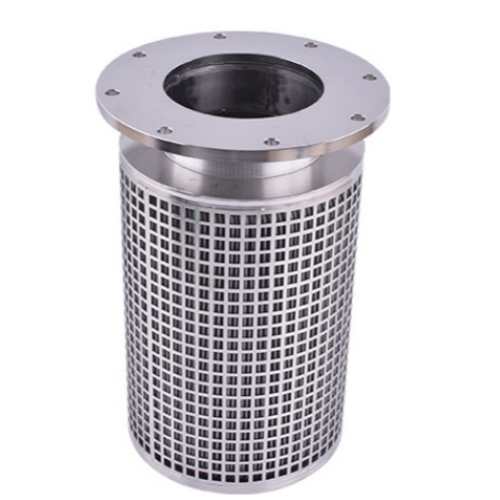
I. Core Structure
String wound filter cartridge is an integrated depth filtration product with 3 key components, which are essential for stable filtration performance.
Filter Core/Support SkeletonMaterial: Commonly used polypropylene (PP) or stainless steel (304/316) in industrial applications; PP is cost-effective for general scenarios, while stainless steel applies to high-temperature and high-pressure working conditions.Structure: Porous tubular shape (pore size 2~5mm) with uniform mesh or honeycomb design. It supports the filter yarn to prevent deformation under pressure and ensures smooth flow of filtrate.Standard specs: Outer diameter 28mm/30mm, inner diameter 20mm, length 10/20/30/40 inches (254/508/762/1016mm), universal for international trade.
Filter Yarn (Filter Wire)Material: Mainstream polypropylene (PP) fiber yarn, also available with absorbent cotton yarn or glass fiber yarn; PP is acid-resistant, alkali-resistant and corrosion-resistant, suitable for most industrial filtration scenarios.Specs: Yarn diameter 0.1~0.5mm. The thinner the yarn, the higher the filtration precision (e.g., 0.1mm yarn for 1μm cartridge, 0.5mm yarn for 50μm cartridge).Features: High toughness, tight winding without loosening, temperature resistance (PP ≤60℃; stainless steel skeleton ≤120℃).
Precision Winding StructureWinding method: Precision spiral winding. Filter yarn is evenly wrapped around the skeleton, forming regular gaps between adjacent yarns (filtration gaps).Winding density: Denser at both ends and moderately dense in the middle, ensuring no filtrate short-circuit and uniform filtration.
II.Working Principle
String wound filter cartridge adopts depth filtration mechanism, relying on dual filtration effects to capture impurities, with stable and efficient performance:
Primary Filtration: Mechanical Sieving
When the liquid passes through the cartridge, impurities larger than the spiral gaps between filter yarns are directly intercepted on the surface and inside the yarn gaps, realizing preliminary filtration.
Secondary Filtration: Adsorption & Entanglement
Fine impurities smaller than the filtration gaps are adsorbed by the fiber surface of the filter yarn, or entangled in the multi-layer winding structure, achieving deep purification of the liquid.
Filtrate Flow Path
Liquid → Enters the outer surface of the cartridge → Passes through the filter yarn gaps and fiber layers → Impurities are trapped → Purified liquid flows out through the porous skeleton → Completes filtration.